
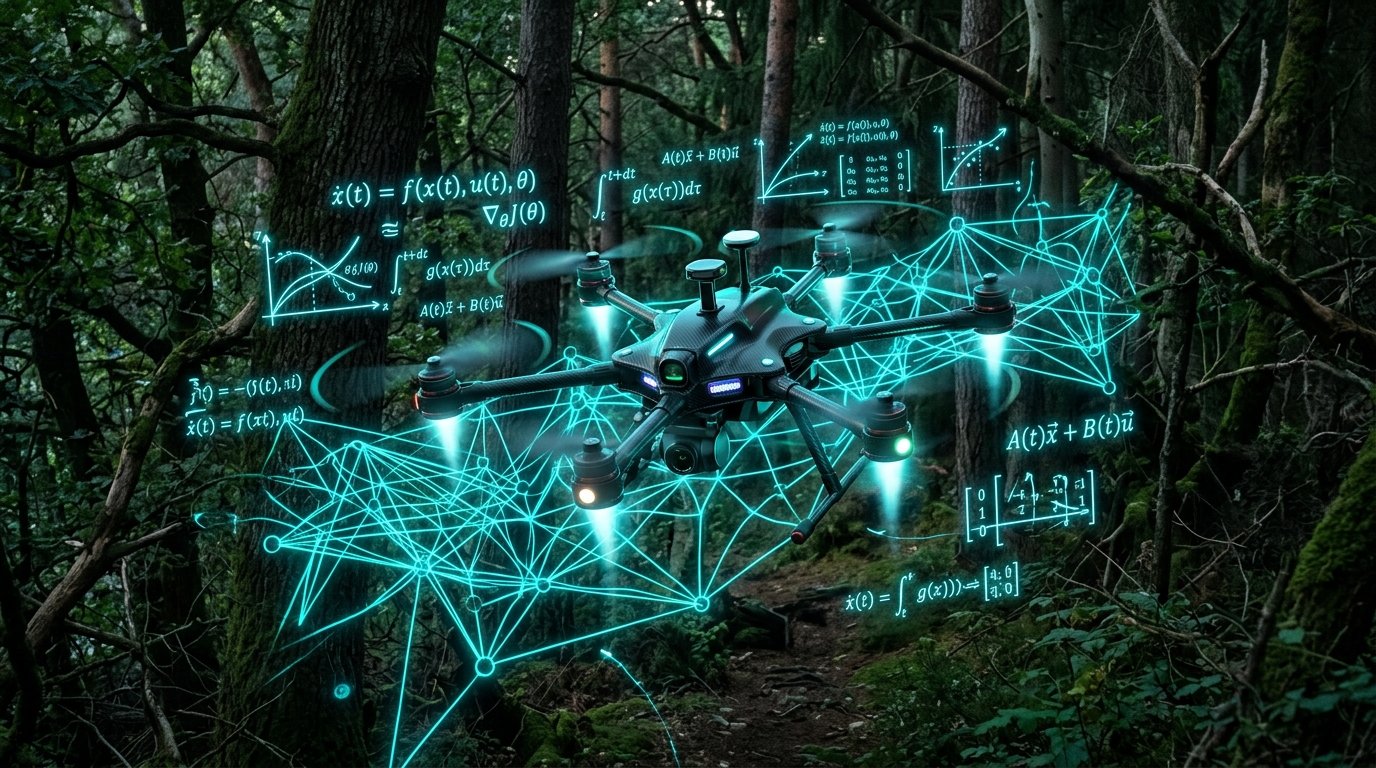
MIT researchers and robotics pioneers are proving that brain-inspired liquid networks can adapt to changing environments in real time using a fraction of the compute required by traditional transformer models.
Evidence classification has not been added yet. Read the full article and source card below for details.
- Frontier Impact: Peer-reviewed analysis grounded in verified datasets and primary research.
- Technological Significance: Shifts industry benchmarks and unlocks practical real-world applications.
- Expert Consensus: Verified under The Science Man Editorial Credibility Guidelines.
MIT researchers and robotics pioneers are proving that brain-inspired liquid networks can adapt to changing environments in real time using a fraction of the compute required by traditional TransformerGLOSSARY: TransformerA deep neural network architecture utilizing multi-head self-attention to process data in parallel. models.
While massive transformer models dominate large language processing, a different architecture is quietly conquering the physical world. Liquid neural networks, inspired by the microscopic nervous system of the C. elegans nematode, are demonstrating unprecedented adaptability in autonomous drones, quadruped robots, and spatial navigation.
Continuous Adaptability Without Retraining
Unlike traditional neural networks whose synaptic weights are frozen after training, liquid networks utilize differential equations that allow parameters to vary continuously over time. This enables a drone navigating through fog, rain, or sensor degradation to adapt its control policy on the fly.
A Thousand-Fold Reduction in Parameters
Where an end-to-end vision-language-action transformer requires tens of billions of parameters, a liquid network achieves robust autonomous flight with fewer than 100,000 parameters, running locally on low-power edge silicon without cloud connectivity.

digitalwebman@gmail.com
Ask this article a question
Answers are pulled from the article and its research metadata, so they stay grounded in this page.
