
Navi Pillay won the 2026 Nobel Peace Prize for her efforts to promote peace and international law. Read about her career, human-rights work and the reason for the award.
Evidence classification has not been added yet. Read the full article and source card below for details.
- Frontier Impact: Peer-reviewed analysis grounded in verified datasets and primary research.
- Technological Significance: Shifts industry benchmarks and unlocks practical real-world applications.
- Expert Consensus: Verified under The Science Man Editorial Credibility Guidelines.
Navi Pillay won the 2026 Nobel Peace Prize for her efforts to promote peace and international law. Read about her career, human-rights work and the reason for the award.
Updated: 11 October 2026. The 2026 Nobel Peace Prize was awarded to South African jurist and human-rights advocate Navanethem “Navi” Pillay. The Norwegian Nobel Committee recognised her efforts to promote peace and international law. This article explains who Pillay is, what work the award recognises, and how her decades in South African and international law connect human rights with peace.
Quick answer: Navi Pillay won the 2026 Nobel Peace Prize on 9 October 2026. The Nobel Committee cited her work promoting peace and international law, including her contribution to strengthening international legal institutions. She has served as a judge at the International Criminal Tribunal for Rwanda and the International Criminal Court, and as United Nations High Commissioner for Human Rights from 2008 to 2014.
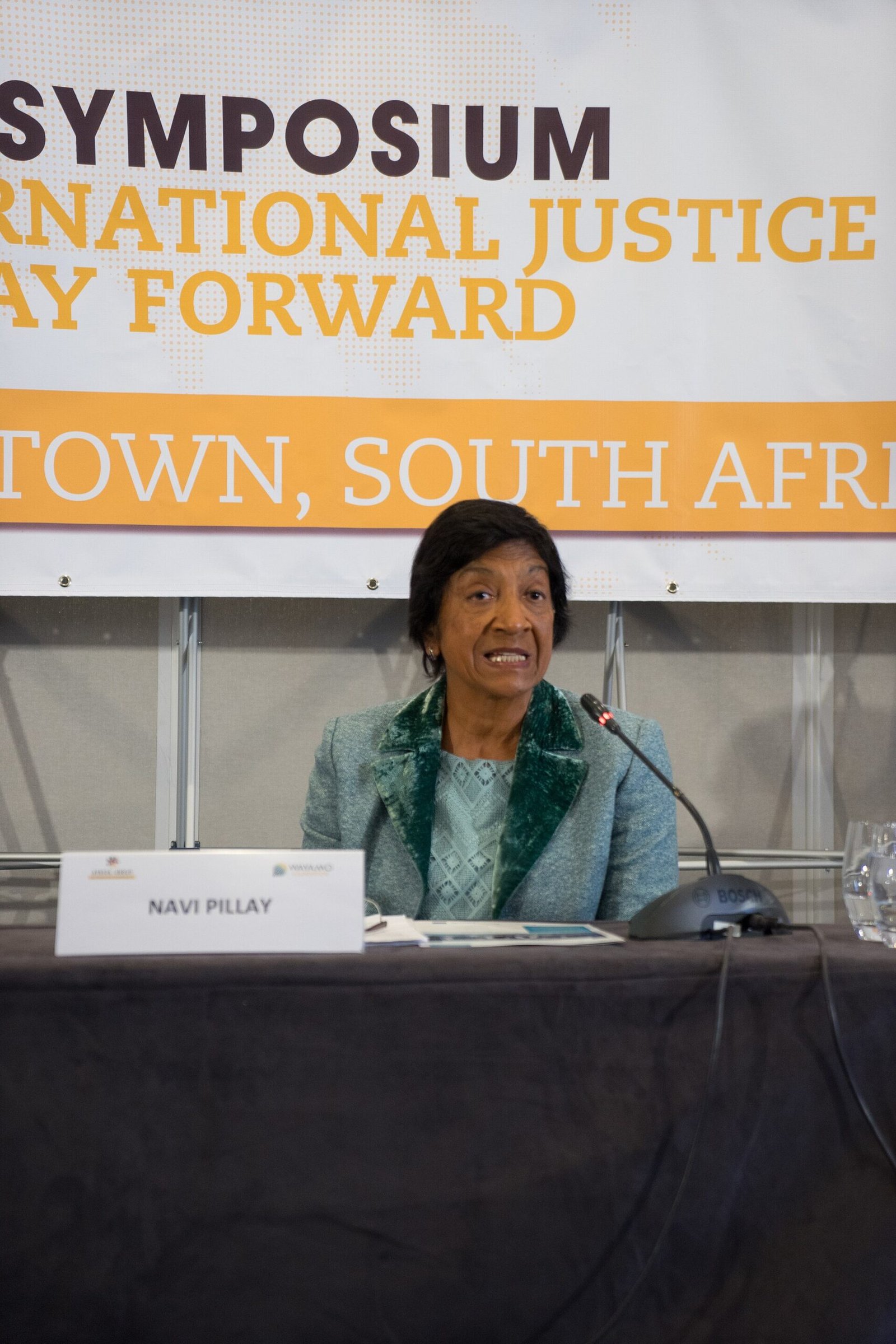 THE SCIENCE MAN
| Key fact | 2026 Nobel Peace Prize |
|---|---|
| Laureate | Navanethem “Navi” Pillay |
| Nationality | South African |
| Announcement | 9 October 2026 |
| Awarding body | Norwegian Nobel Committee |
| Official reason | Her efforts to promote peace and international law |
| Major roles | Judge at the ICTR and ICC; UN High Commissioner for Human Rights (2008–2014) |
For results across all 2026 Nobel categories, see our 2026 Nobel Prize winners roundup.
Who is Navi Pillay?
Navanethem “Navi” Pillay is a South African jurist whose career has moved from grassroots legal practice under apartheid to senior roles in international courts and the United Nations. She is known for work on human rights, accountability and the development of international law. Pillay was born in Durban, South Africa, in 1941, into a Tamil Indian family. Her background is South African; “Indian-origin” describes her family heritage, not her nationality.
Her professional path began in a country where apartheid systematically denied rights on racial grounds. In 1967, Pillay became the first woman to establish a law practice in Natal Province. As a lawyer, she represented anti-apartheid activists and trade unionists and brought attention to abuses against people in detention. She later became the first Black woman appointed to South Africa’s High Court, in 1995, during the transition away from apartheid.
Those early experiences help explain why her later work repeatedly returned to a central question: what institutions can do when people in power violate the rights of others? For Pillay, law was not only a set of courtroom procedures. It could create a public record, give victims a route to be heard and set standards that governments and armed actors could be held against. The Nobel Committee’s 2026 citation connects that long-running focus with its recognition of her efforts to promote peace and international law.
Why did Navi Pillay win the 2026 Nobel Peace Prize?
The Nobel Committee’s official explanation is that the prize honours Pillay “for her efforts to promote peace and international law.” Its announcement describes her as a jurist whose work has helped strengthen international legal institutions. The recognition reflects a career across domestic courts, international criminal tribunals, the United Nations human-rights system and independent inquiry work.
The Peace Prize is not limited to people who negotiate a ceasefire or sign a peace agreement. It can recognise efforts to prevent conflict, protect rights, build cooperation or strengthen the institutions that make a durable peace more possible. The committee’s reasoning places Pillay in that last group: her contribution is closely associated with making international rules and accountability mechanisms meaningful.
Law does not stop violence by itself. Courts and investigative bodies depend on evidence, legal authority, cooperation and enforcement. But they can establish responsibility, preserve testimony, clarify standards and make it harder for serious abuses to disappear from public record. They may also give survivors a formal place in the process. Pillay’s career illustrates why the Nobel Committee connects international justice to peace: accountability is one part of rebuilding trust after violence and reducing the expectation that powerful actors will face no consequences.
Navi Pillay’s career: from South African courts to the United Nations
| Period | Milestone | Why it matters |
|---|---|---|
| 1967 | Established a law practice in Natal Province | First woman to do so in the province; represented anti-apartheid activists and trade unionists |
| 1995 | Appointed to South Africa’s High Court | First Black woman to hold the judgeship |
| 1995–2003 | Judge at the International Criminal Tribunal for Rwanda | Worked in a tribunal prosecuting those responsible for the 1994 genocide |
| 1999–2003 | President of the ICTR | Led the tribunal during a formative period for international criminal jurisprudence |
| 2003–2008 | Judge at the International Criminal Court | Served on the Appeals Chamber |
| 2008–2014 | UN High Commissioner for Human Rights | Led the United Nations human-rights office and advocated for rights protections globally |
| 2021–2026 | Chair of the Independent International Commission of Inquiry on the Occupied Palestinian Territory, including East Jerusalem, and Israel | Led an independent UN inquiry reporting to the Human Rights Council |
Work at the International Criminal Tribunal for Rwanda
Pillay joined the International Criminal Tribunal for Rwanda (ICTR) in 1995. The tribunal was established by the United Nations to prosecute people responsible for genocide and other serious violations of international humanitarian law committed in Rwanda in 1994. She served as a judge for eight years and was its president for four of them.
The ICTR’s proceedings helped shape international law on sexual violence during conflict. In the Akayesu case, the tribunal recognised that rape and sexual violence can constitute acts of genocide when committed with the specific intent to destroy a protected group, in whole or in part. This was a legal development produced by the tribunal through its judges and prosecutors, not the work of one person alone. Pillay’s role placed her within the institution that considered these cases and developed the law.
That contribution matters beyond the courtroom. Naming sexual violence as a potential instrument of genocide changed how international law could describe and prosecute crimes that had often been minimised or treated as incidental to war. Legal definitions do not automatically prevent future abuse, but they affect what investigators look for, what prosecutors can charge and how survivors’ experiences are recognised.
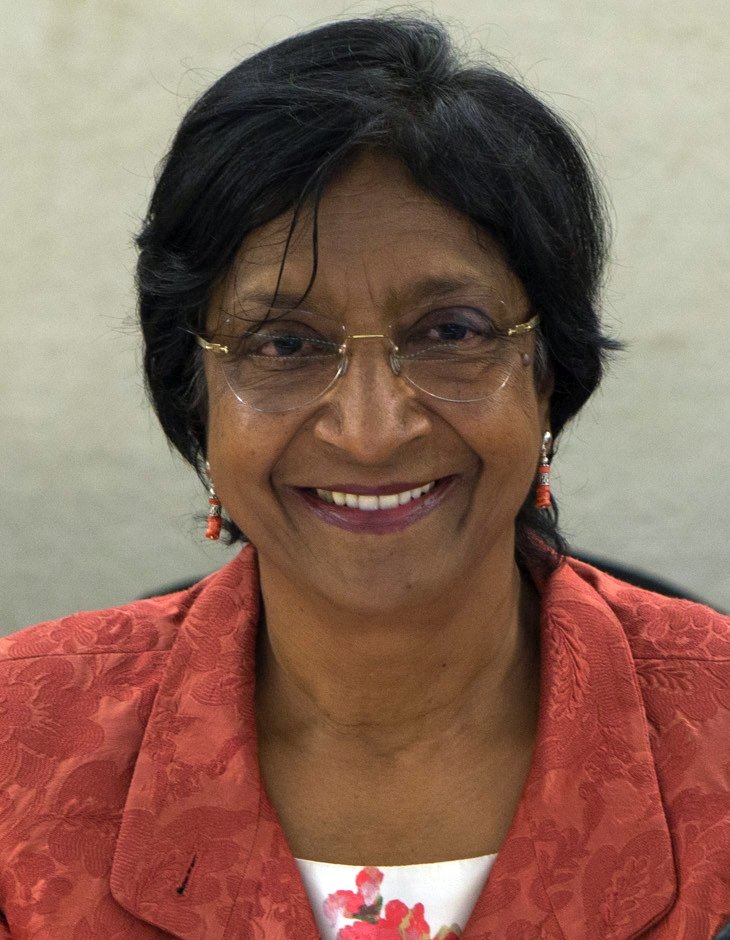 THE SCIENCE MAN
International Criminal Court and High Commissioner for Human Rights
From 2003 to 2008, Pillay served as a judge at the International Criminal Court (ICC) in The Hague, including on its Appeals Chamber. The ICC is a permanent court with jurisdiction over certain serious crimes under its founding treaty. It is institutionally distinct from the ICTR, which was a temporary tribunal focused on crimes connected to Rwanda in 1994. These courts do not replace national justice systems; their jurisdiction and ability to act have limits.
In 2008, Pillay became the United Nations High Commissioner for Human Rights, serving until 2014. The High Commissioner leads the Office of the UN High Commissioner for Human Rights (OHCHR), which monitors rights, provides guidance and supports UN human-rights mechanisms. The role is not a world-government position and does not give the office power to convict states or individuals. Its influence comes through reporting, advocacy, technical work and the international attention it can bring to documented abuses.
During her tenure, Pillay spoke about discrimination, protection of civilians, freedom of expression, women’s rights and the responsibilities of governments under international human-rights law. She also supported the role of civil society and victims in informing international standards. The office’s reach depends on member-state cooperation, but the post gives its holder a platform to make human-rights concerns visible and to press governments to meet obligations they have accepted.
Her recent UN inquiry work—and why the legal distinction matters
Pillay later chaired the Independent International Commission of Inquiry on the Occupied Palestinian Territory, including East Jerusalem, and Israel, a body created by the UN Human Rights Council. In 2025, the commission issued a report on Gaza that concluded Israel had committed genocide. The Government of Israel rejected the commission’s report and its conclusions. These are sharply contested claims, so they should be attributed to the bodies that made them rather than repeated as uncontested fact.
A Commission of Inquiry is an investigative UN mechanism; it is not a criminal court. Its report is not a judgment by the International Criminal Court or the International Court of Justice. This distinction is essential when discussing the 2026 Nobel Peace Prize: the award recognises Pillay’s efforts to promote peace and international law, and does not itself determine the legal responsibility of any party in a conflict.
The Nobel Committee’s choice has been discussed in a highly polarised political environment. A careful account can describe Pillay’s role, the commission’s findings and Israel’s rejection without presenting a Nobel award as a substitute for legal proceedings. The point of explaining this context is not to decide a case; it is to help readers understand the difference between an investigator’s report, a government’s response and a court’s binding judgment.
How international law can support peace
Peace is sometimes described as the absence of open fighting. A lasting peace usually requires more: people need protection from violence, a way to resolve disputes, confidence that rules apply to everyone and credible ways to respond when serious crimes occur. International law gives states and international bodies a shared vocabulary for obligations, prohibited conduct and accountability. It cannot guarantee compliance, but it can make conduct more visible and give institutions a basis to respond.
Pillay’s career spans several parts of that system. A domestic lawyer can defend a person facing state power. A tribunal judge interprets rules for crimes committed during conflict. A human-rights commissioner can investigate and speak publicly about patterns that cross borders. An independent inquiry can assemble evidence and make findings for a UN body. These roles differ in legal authority, but they share a concern with whether people have protection when institutions fail them.
The Nobel Prize’s recognition therefore reflects a long institutional story rather than a single case. Pillay has worked at times when the international system was imperfect, politically contested and dependent on state cooperation. The value of the work is not that every decision is universally accepted; it is that legal institutions can create procedures for examining claims instead of leaving them to power alone.
At the same time, international law has real limits. Courts may lack jurisdiction, investigations may be blocked, warrants may go unenforced and victims may wait years for a result. Human-rights offices can document and advise but generally cannot compel governments to act. Recognition of Pillay’s work does not erase these constraints. It highlights the continued effort required to make legal protections function in practice.
What the 2026 award means for South Africa and the wider world
Pillay is South African, and her career began in the legal struggle against apartheid. Her Nobel recognition places that national history alongside the later development of international courts and human-rights institutions. It also recognises the work of lawyers and judges from countries outside the traditional centres of global power in shaping international law.
For Indian readers, Pillay’s Tamil Indian family heritage may be a point of connection, but the accurate description remains that she is a South African jurist. Her story shows how identity, national history and international service can intersect without being collapsed into one label. The Nobel was awarded for her professional contributions, not simply her ancestry.
The prize also renews public attention to a question that can sound abstract: what does international law do for people living through war, political repression or discrimination? Pillay’s record suggests one answer. It can provide a framework for investigations, a forum for testimony, legal language for harms that were once dismissed and a standard by which states can be challenged. Those mechanisms do not solve every conflict, but they can help build conditions in which peace has a stronger foundation.
Frequently asked questions about the 2026 Nobel Peace Prize
Who won the 2026 Nobel Peace Prize?
Navanethem “Navi” Pillay, a South African jurist and human-rights advocate, won the 2026 Nobel Peace Prize. The Norwegian Nobel Committee announced her as the laureate on 9 October 2026.
Why did Navi Pillay receive the Nobel Peace Prize?
The Nobel Committee recognised her efforts to promote peace and international law. Her career includes work in South African courts, the ICTR, the ICC, the UN human-rights system and an independent UN commission of inquiry.
Is Navi Pillay Indian or South African?
Pillay is South African. She was born in Durban and comes from a Tamil Indian family, so she is often described as being of Indian origin.
What did Navi Pillay do at the Rwanda tribunal?
She served as an ICTR judge from 1995 to 2003 and as the tribunal’s president from 1999 to 2003. The tribunal’s jurisprudence helped establish that rape may constitute genocide when the legal elements, including specific intent, are met.
Did the Nobel Peace Prize decide a legal case?
No. The Nobel Prize is an award, not a court ruling. It recognises Pillay’s work; it does not determine the legal responsibility of any person, state or organisation.
When will the 2026 Nobel Peace Prize ceremony take place?
The Nobel Peace Prize ceremony is scheduled for 10 December 2026 in Oslo, Norway, as part of the annual Nobel award ceremonies.
Sources and photo credits
- Norwegian Nobel Committee: 2026 Nobel Peace Prize announcement
- Official Nobel Peace Prize 2026 laureate page
- OHCHR biography of Navanethem Pillay
- OHCHR: Independent International Commission of Inquiry
- United Nations profile: Navi Pillay, 2026 Nobel Peace laureate
- UN News: career and Nobel recognition
- Israel’s Permanent Mission to the UN: response to the Commission of Inquiry report
- Feature portrait by Wayamo Foundation (CC BY-SA 2.0; license)
- UN Human Rights Council photo by U.S. Mission Geneva (Public Domain Mark)
Editorial note: This profile reports the Nobel Committee’s citation and attributes contested findings to the relevant organisations. The visible Science Man corner mark is a separate webpage overlay; the licensed photographs themselves have not been retouched.

digitalwebman@gmail.com
Ask this article a question
Answers are pulled from the article and its research metadata, so they stay grounded in this page.

.jpg)
