
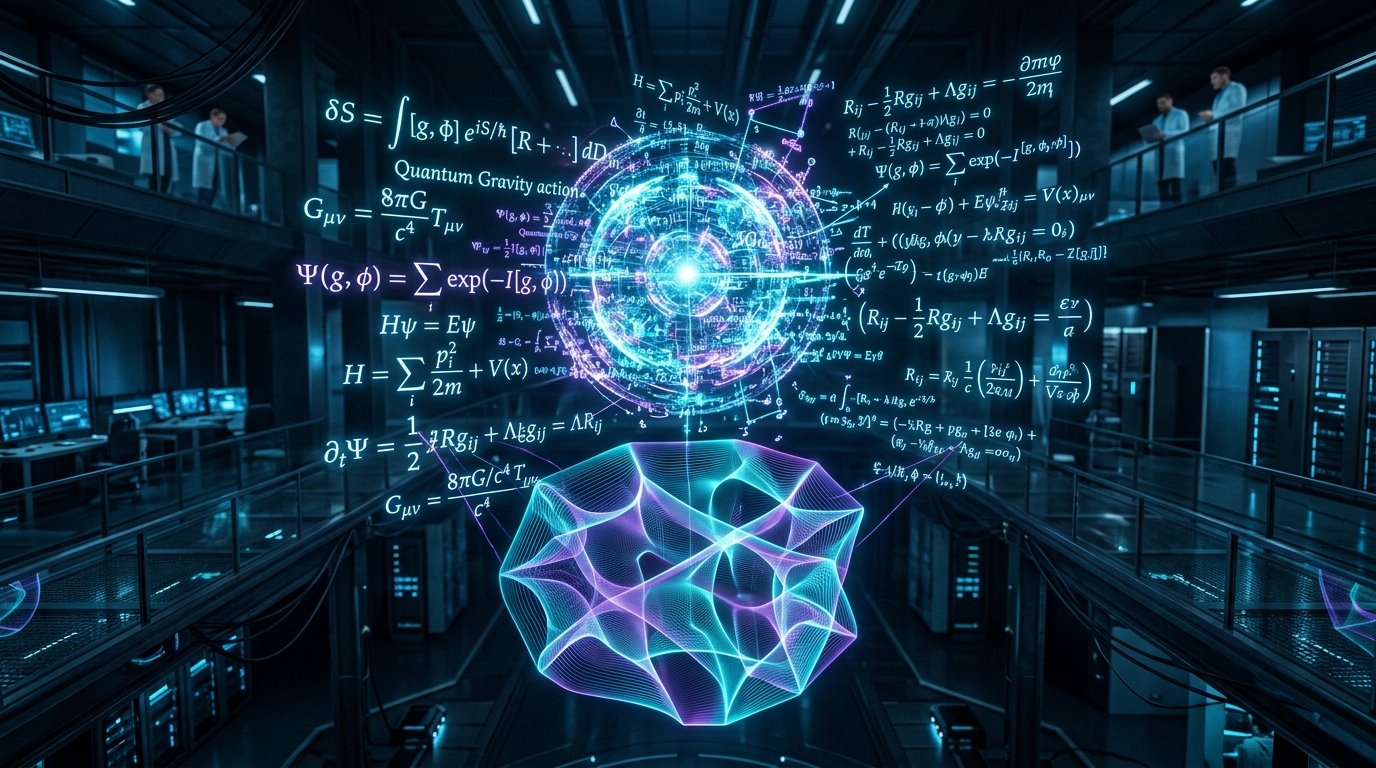
A deep dive into whether neural reasoning engines can move beyond pattern matching to hypothesize novel mathematical theorems and solve longstanding open conjectures in theoretical physics.
Evidence classification has not been added yet. Read the full article and source card below for details.
- Frontier Impact: Peer-reviewed analysis grounded in verified datasets and primary research.
- Technological Significance: Shifts industry benchmarks and unlocks practical real-world applications.
- Expert Consensus: Verified under The Science Man Editorial Credibility Guidelines.
A deep dive into whether neural reasoning engines can move beyond pattern matching to hypothesize novel mathematical theorems and solve longstanding open conjectures in theoretical physics.
Can an artificial intelligence discover physical truths that have eluded human minds for centuries? Recent experiments with formal mathematical verification engines and autonomous theorem provers suggest the boundary between computational calculation and genuine conceptual discovery is dissolving.
Formal Proof Verification Meets Neural Search
By coupling deep neural heuristics with formal proof assistants like Lean 4, AI systems can generate millions of speculative lemmas and verify their validity with mathematical certainty. In preliminary trials, automated agents have successfully discovered novel combinatorial bounds and resolved longstanding geometry problems.

digitalwebman@gmail.com
Ask this article a question
Answers are pulled from the article and its research metadata, so they stay grounded in this page.
