
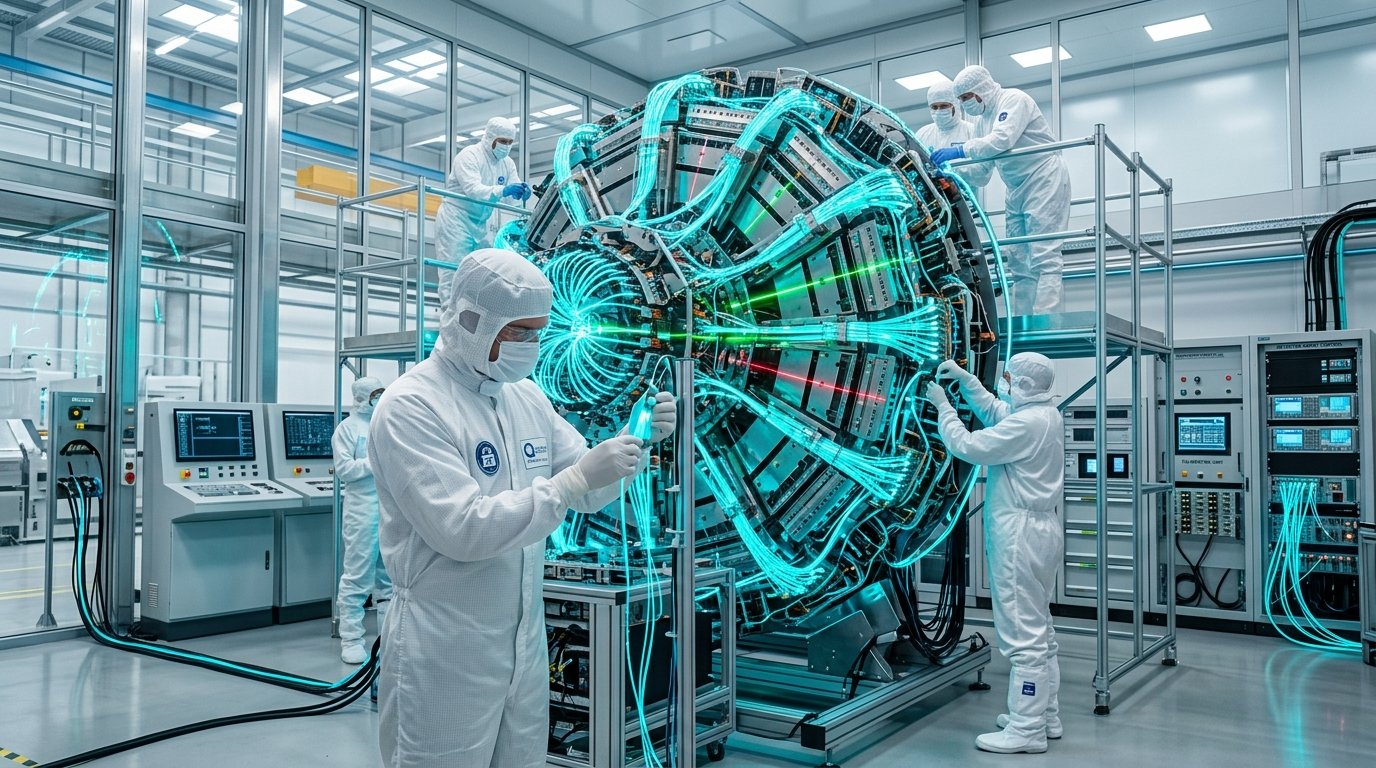
A multi-billion-dollar overhaul of the Large Hadron Collider will increase collision rates tenfold, providing researchers with the precision necessary to test extensions of the Standard Model.
Evidence classification has not been added yet. Read the full article and source card below for details.
- Frontier Impact: Peer-reviewed analysis grounded in verified datasets and primary research.
- Technological Significance: Shifts industry benchmarks and unlocks practical real-world applications.
- Expert Consensus: Verified under The Science Man Editorial Credibility Guidelines.
A multi-billion-dollar overhaul of the Large Hadron Collider will increase collision rates tenfold, providing researchers with the precision necessary to test extensions of the Standard Model.
The world’s most powerful particle accelerator is undergoing a transformative upgrade. The High-Luminosity Large Hadron Collider (HL-LHC) will dramatically increase proton beam luminosity, generating ten times more collisions than its predecessor and opening new windows into fundamental physics.
Probing the Dark Sector
With trillions of new collisions, experimental teams at ATLAS and CMS aim to observe rare Higgs boson decay channels and search for hypothetical ‘dark photons’—gauge bosons that could mediate interactions between ordinary matter and dark matter.

digitalwebman@gmail.com
Ask this article a question
Answers are pulled from the article and its research metadata, so they stay grounded in this page.
