
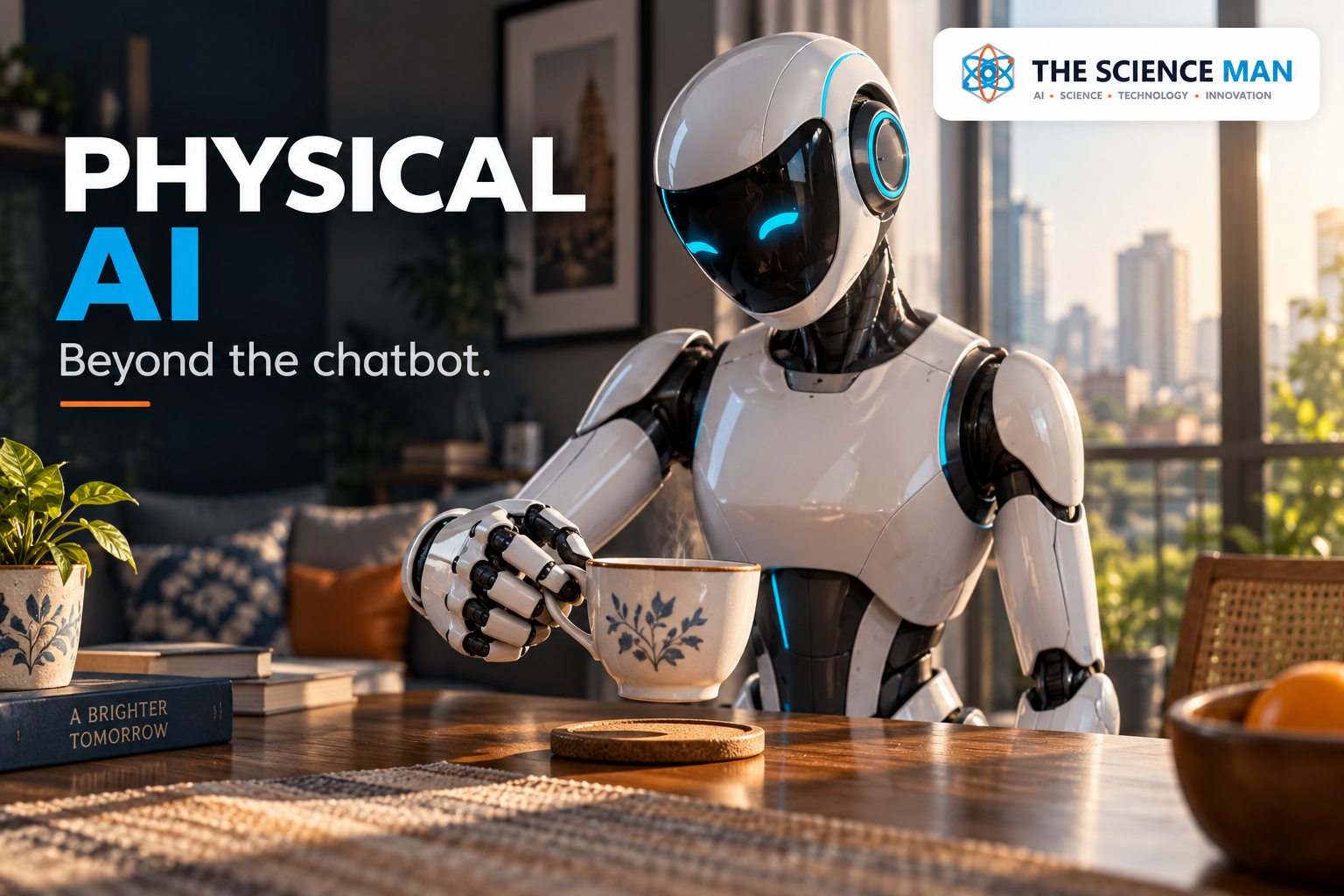
Discover what physical AI is, how robots learn, what changed in 2026, and what it could mean for homes, factories, jobs and India.
Evidence classification has not been added yet. Read the full article and source card below for details.
- Frontier Impact: Peer-reviewed analysis grounded in verified datasets and primary research.
- Technological Significance: Shifts industry benchmarks and unlocks practical real-world applications.
- Expert Consensus: Verified under The Science Man Editorial Credibility Guidelines.
Discover what physical AI is, how robots learn, what changed in 2026, and what it could mean for homes, factories, jobs and India.
Imagine asking a robot to bring you a cup of tea. The instruction sounds simple. Yet before that cup reaches your hand, the machine must find it, judge its position, choose a grip, lift without spilling, and avoid whatever stands in the way.
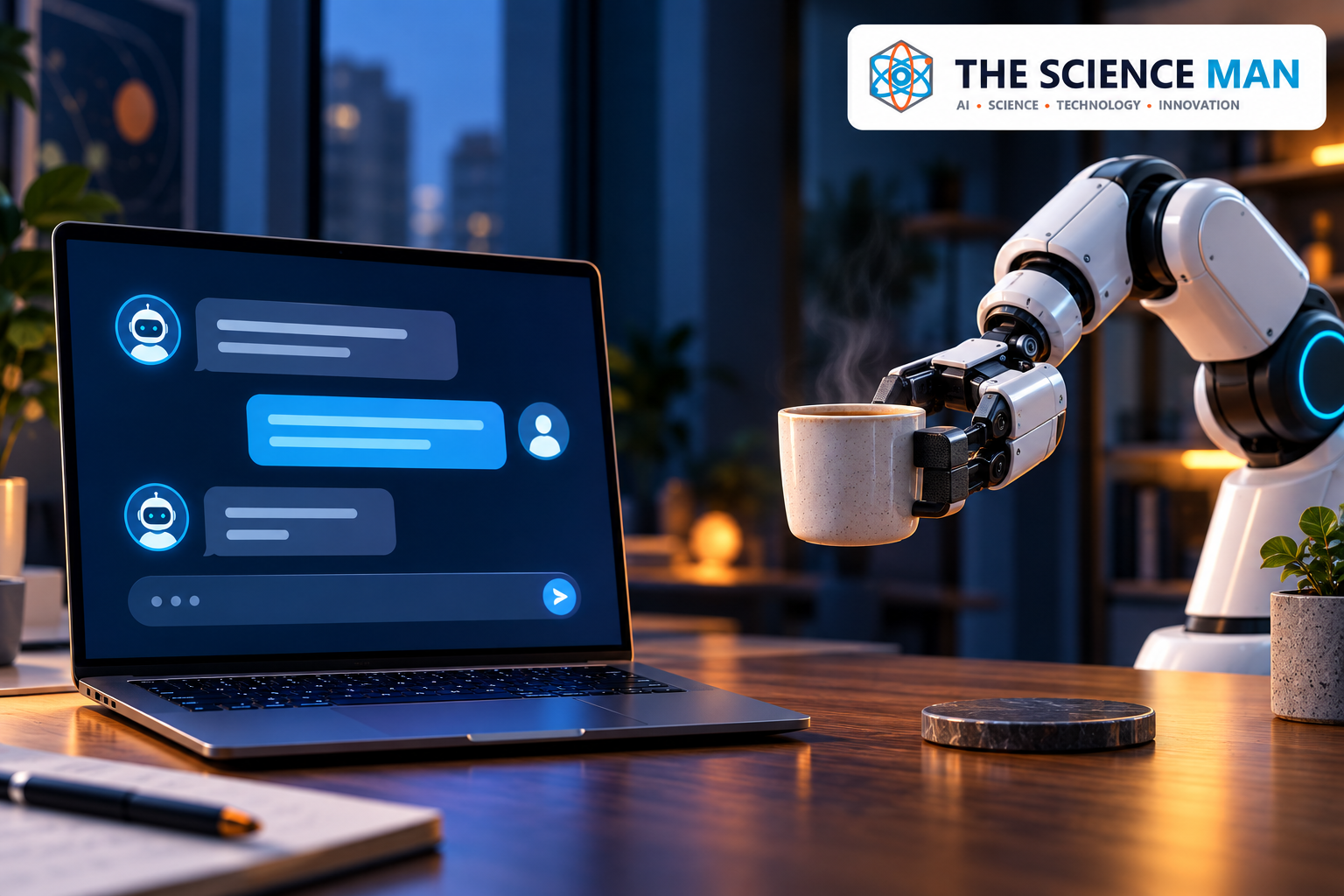
A chatbot can explain those steps beautifully. A robot has to make them happen.
That gap is where physical AI becomes interesting. It connects artificial intelligence with machines that sense and act in the real world. The goal is useful adaptability: handling changes in objects, surroundings, and instructions without rebuilding the entire system for every situation.
For readers following technology in 2026, this is a story worth understanding beyond the spectacular robot videos. The exciting question is whether machines can become dependable enough to help with ordinary work.
What is physical AI?
Physical AI describes AI systems that use information about their surroundings to guide actions in physical environments. A robot might recognise a package, estimate where it sits, and adjust its movement to pick it up.
The body does not have to resemble a person. A wheeled machine, a robotic arm, or another autonomous system can fit the idea. What matters is the connection between perception, decision-making, and action. NVIDIA’s robotics overview describes this combination of capabilities.
Think of physical AI as intelligence meeting consequences. A slightly inaccurate answer on a screen can be edited. A slightly inaccurate movement can miss a handle or knock something over. That makes feedback essential: the machine needs to observe what actually happened and respond appropriately.
Physical AI vs generative AI: what changes?
Generative AI produces outputs such as text, pictures, audio, and code. Physical AI is concerned with acting through hardware. The categories overlap because a robot can use generative models to interpret instructions or plan activities.
Consider a kitchen assistant. A language model might explain how to clear a table. A physical system must distinguish a plate from a napkin, locate a suitable destination, and move each object successfully.
A fluent explanation is only part of that job. Hardware limits, timing, balance, and contact with objects still matter. Connecting a chatbot to an arm does not automatically create a reliable household helper.
This distinction also explains why impressive conversational ability should never be treated as proof of physical competence.
How does physical AI work?
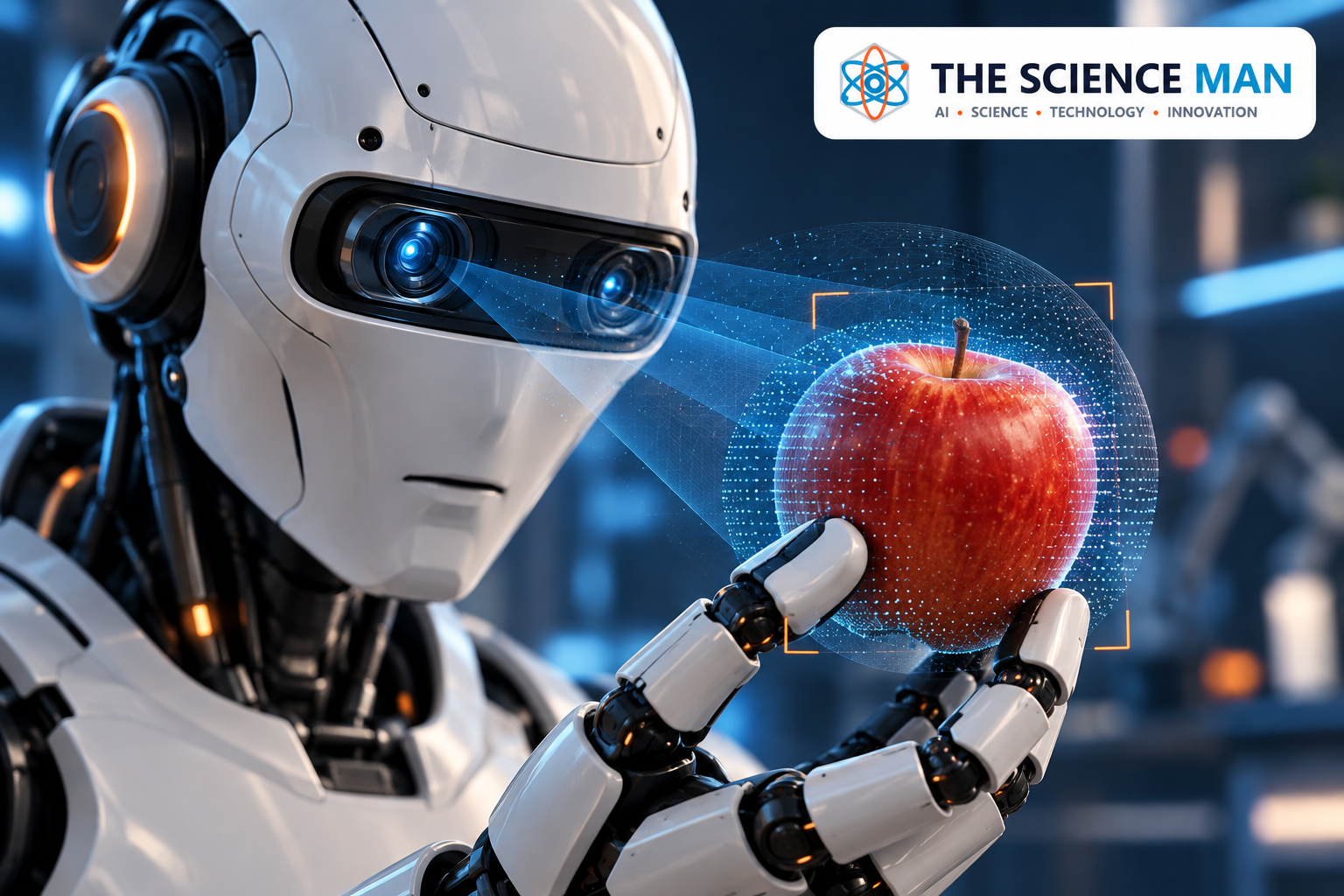
A useful way to understand the process is to follow one action: picking up an apple.
First, cameras and other sensors provide information. Depending on the machine, that may include depth measurements, joint positions, or contact forces. The system needs enough information to estimate where the apple is relative to its body.
Next comes interpretation. “Pick up the apple beside the bowl” requires identifying the correct object and understanding a spatial relationship. Then the robot needs a movement that its hardware can execute.
Finally, it must check the result. Did the apple move with the gripper? Is the grip stable? Has something entered the workspace? Successful behaviour depends on this continuing feedback, rather than one decision made at the beginning.
Architectures differ, but the practical challenge remains the same: turn imperfect observations into appropriate movements.
Why a gentle grip is a difficult problem
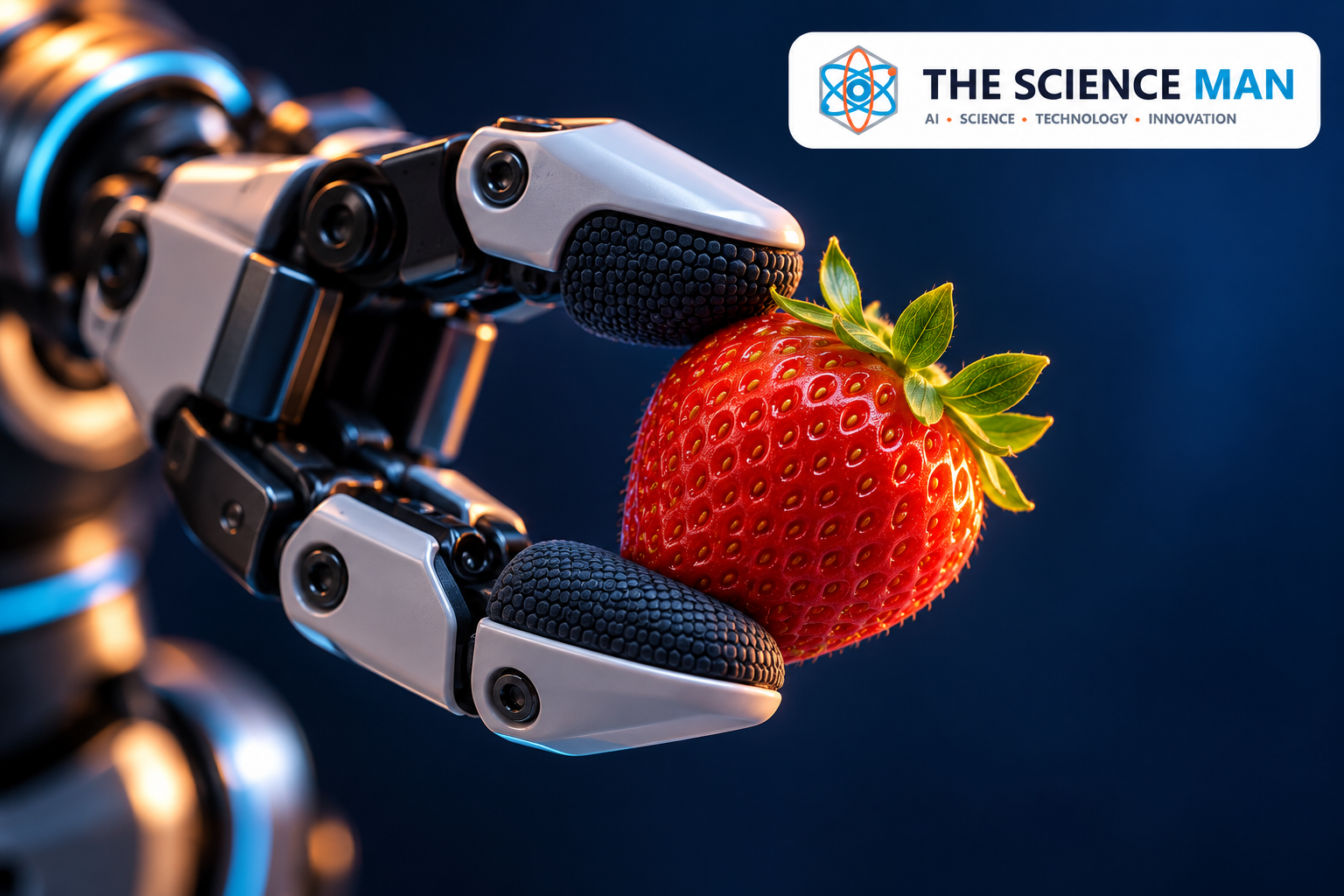
People adjust their grip almost without noticing. We hold a strawberry differently from a metal bottle. Robots need some way to make comparable adjustments.
Too little force and an object slips. Too much and it gets damaged. Shape matters, but so do friction, weight, softness, and the position of the contact points.
Now add uncertainty. The object might be partly hidden. A wrapper might be shiny. A cup may contain liquid, making its weight different from the empty examples used during training.
This is why dexterity deserves attention alongside dramatic walking demonstrations. For many useful jobs, carefully handling unfamiliar objects matters more than looking human. The right tool may be a simple gripper designed for a specific task, rather than an elaborate five-fingered hand.
How robots learn before entering the real world
Training can involve human demonstrations, recorded robot experience, simulation, and combinations of these approaches. The mix depends on the task and system.
In imitation learning, examples show what successful behaviour looks like. Physical Intelligence’s original π0 research announcement illustrates work on a generalist robot policy trained for varied manipulation tasks across different robot platforms. Such research explores whether learning can transfer beyond a single narrowly programmed routine.
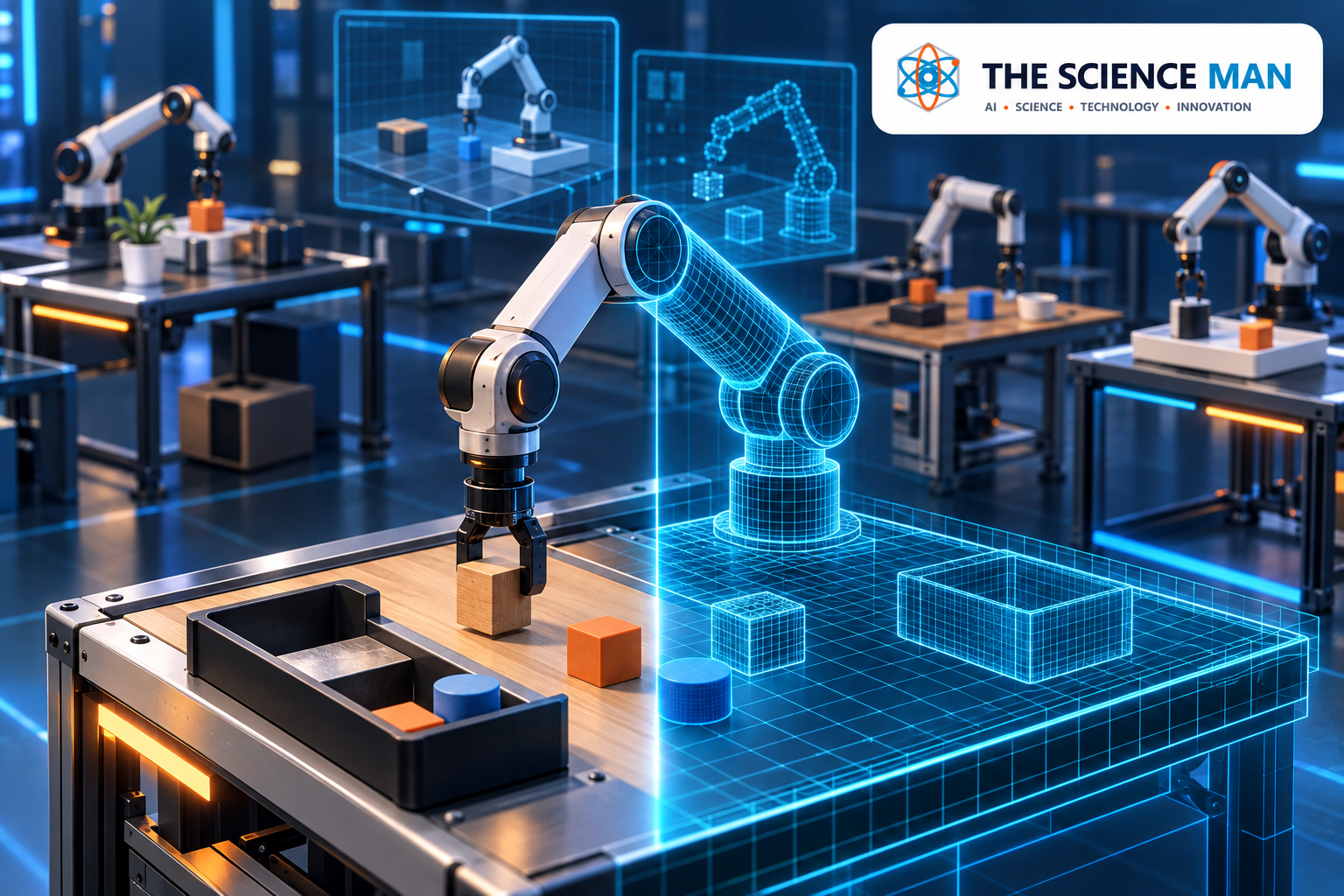
Simulation offers another route. Developers create virtual environments where robots can practise or be tested without repeatedly risking physical equipment. NVIDIA Isaac Sim supports robotics simulation and synthetic data generation.
But a convincing virtual scene is not automatically an accurate physical world. Real materials deform, cameras pick up glare, and mechanical parts behave imperfectly. Skills learned virtually therefore need careful validation on real machines.
What is new in physical AI in 2026?
One concrete development is Google DeepMind’s Gemini Robotics 2 announcement, published on July 30, 2026. The company describes advances in whole-body control, dexterous manipulation, and cooperation between robots.
Its architecture includes models for physical reasoning and models that translate visual information and instructions into robot actions. DeepMind also reports that some dexterous tasks remain challenging, an important qualification behind the demonstrations.
These are developer-reported results, not evidence that a universally capable home robot has arrived. Access and deployment conditions also differ between the models.
The broader significance is the direction of research: connecting understanding, planning, and movement over longer sequences. For readers, the useful question is how reliably those sequences work when conditions change.
Where physical AI could become useful first
Structured workplaces offer practical starting points because tasks, layouts, and success criteria can be more clearly defined than in a busy home.
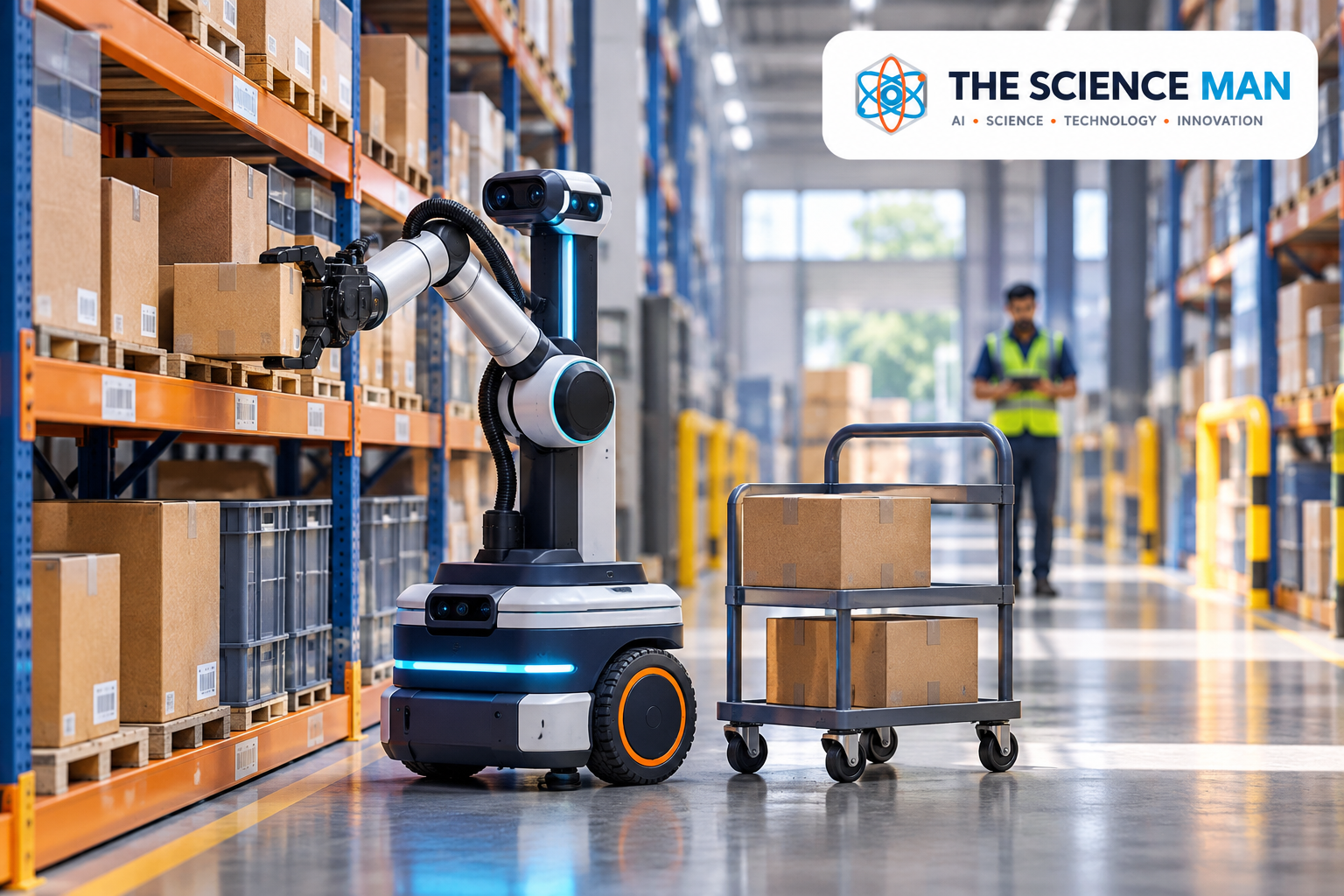
Picture a warehouse where a machine transfers cartons between shelves and a trolley. A useful system must handle relevant package variation, recognise blocked access, and know when to request assistance.
The business case depends on the complete workflow. Faster movement means little if workers constantly reset the robot. A slower machine that completes an agreed task consistently may deliver more value.
This is an illustrative use case, not a claim that every warehouse robot already has general-purpose intelligence. Many existing machines rely on specialised automation. Buyers need to examine the actual capabilities of each system rather than the label attached to it.
Factories need consistency more than spectacle
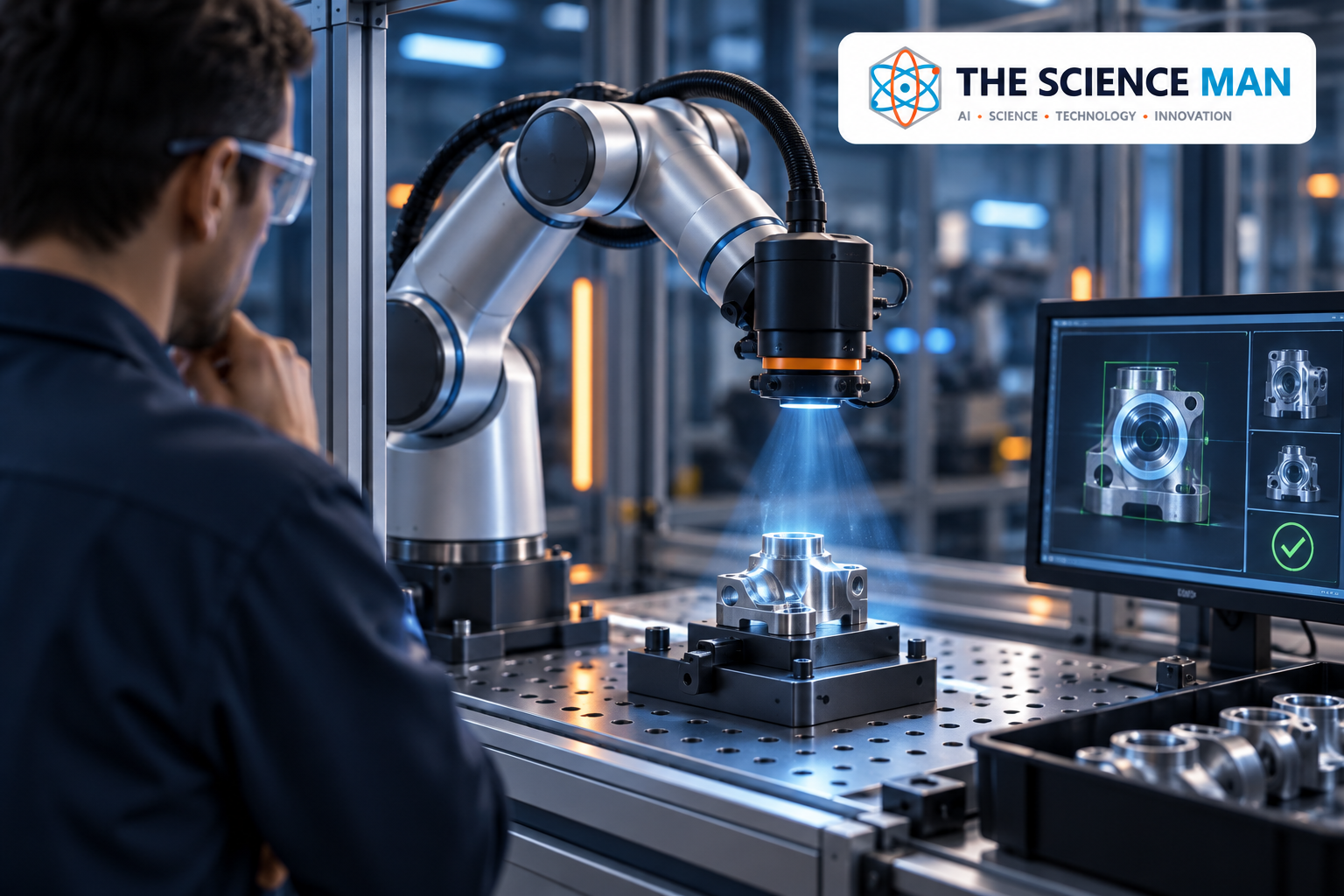
Manufacturing offers another way to judge progress. Imagine an inspection station handling several versions of a component. An adaptive system could potentially help with positioning, visual checks, or routing items for further inspection.
Yet a factory cannot judge success from a polished demonstration alone. It needs measurements across normal operating conditions: variation between parts, lighting changes, maintenance interruptions, and recovery after mistakes.
A sensible pilot starts with one bounded task. Record the current process, define acceptable results, and compare the robot-assisted process under equivalent conditions.
The value might be fewer damaged parts, reduced repetitive handling, or more consistent inspection. Those outcomes are more meaningful than whether the machine has a face. Integration with people and existing equipment will often determine whether a promising idea becomes useful work.
Why your home is a tougher environment
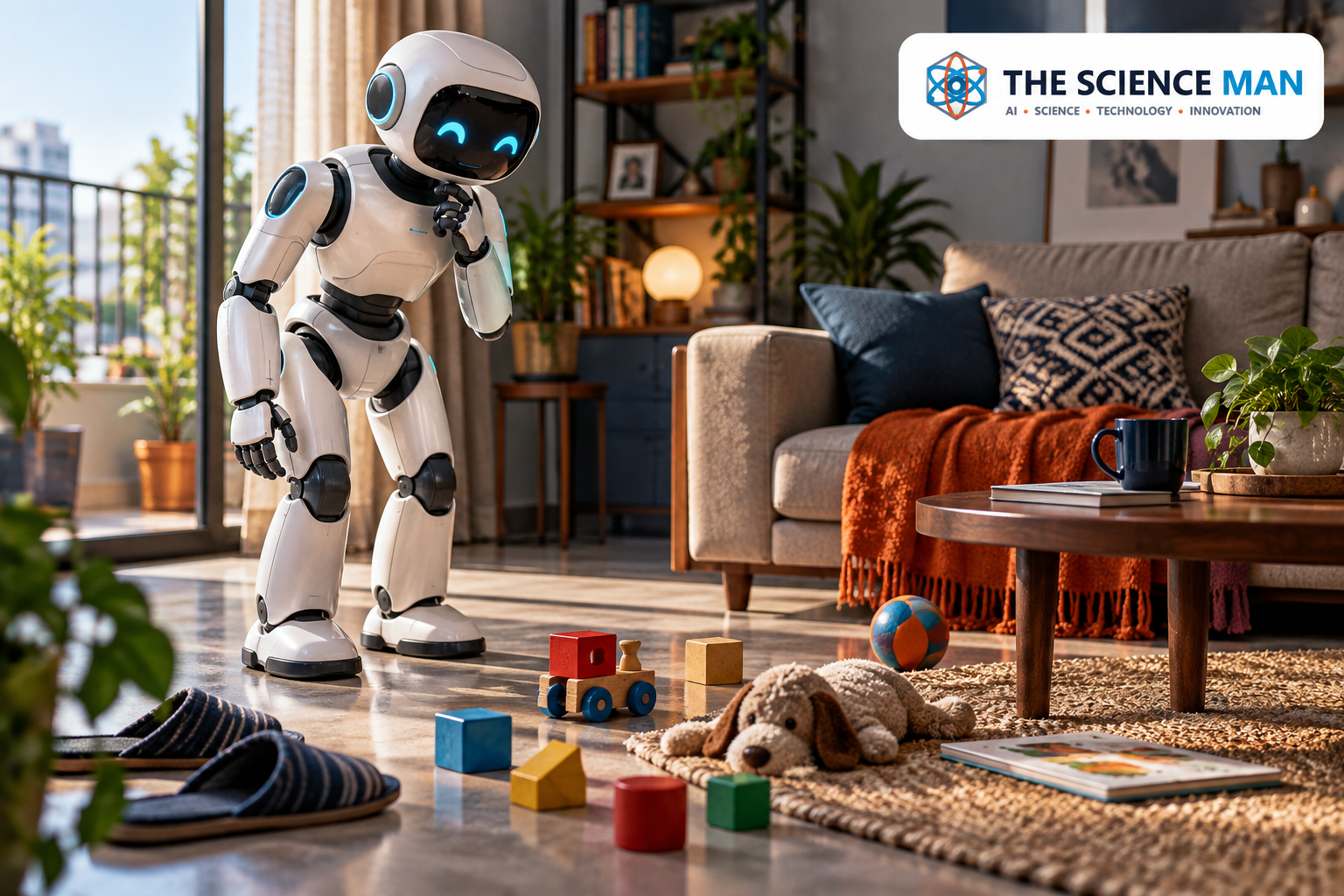
A living room changes constantly. Someone moves a chair. A slipper appears in the doorway. A charging cable trails across the floor. Instructions also depend on context: “put that away” makes sense to someone who knows your habits.
For a household robot, these details become perception and planning problems. Even completing a familiar action can require handling a new object or a different arrangement.
Then there is privacy. Cameras operating inside a home may encounter personal documents, conversations, and family routines. People will reasonably want to know what is recorded, where processing happens, and who can access stored information.
A practical home helper must therefore earn trust through predictable behaviour, understandable controls, and useful performance. A charming voice cannot compensate for unreliable movement or unclear data practices.
What could physical AI mean for India?
For India, the opportunity is broader than importing expensive humanoids. There is potential work in integration, maintenance, machine vision, training data, and task-specific robotics. These are possibilities, rather than guaranteed market outcomes.
Local conditions should shape the design. A system may need to cope with dust, heat, uneven floors, mixed packaging, or instructions in more than one language. A successful demonstration elsewhere does not settle those questions.
For a smaller business, starting with a manageable process makes sense. A clearly defined material-handling or inspection task is easier to evaluate than a promise to automate an entire operation.
Students can prepare by combining programming with mechanics, electronics, and patient experimentation. Learning to diagnose why a robot missed an object is valuable precisely because real systems rarely behave perfectly the first time.
Will physical AI replace jobs?
There is no honest single answer for every occupation. Jobs contain different tasks, and those tasks vary in how easily they can be automated.
Repetitive handling may be a candidate in some settings. Troubleshooting unusual failures, managing customers, and taking responsibility for changing situations can be much harder to transfer to a machine.
Organisations may redesign roles around new equipment, but workers can still face disruption. Training should be part of implementation, rather than something discussed after deployment.
For an individual, a useful approach is to understand the tools entering their field and strengthen the skills those tools require around them. Operating, maintaining, evaluating, and improving a system are different capabilities from simply watching it work.
A useful test is to ask what happens on a bad day. Can the system recover when a box is dented, a sensor gets dirty, or an instruction is unclear? Who notices the problem, and how quickly can work resume? These ordinary questions connect technical progress with everyday value. They also give readers a better way to follow robotics than counting impressive tricks.
How to judge the next viral robot video
Start with the missing context. Was the robot acting autonomously, following a script, or being controlled remotely? Was the footage edited or accelerated? How many attempts were needed?
Next, ask what changed between trials. Repeating a task in an unchanged setup is different from handling unfamiliar objects in unfamiliar surroundings.
Finally, look for intervention and recovery. A machine that recognises uncertainty and stops appropriately may be more useful than one that continues confidently into a mistake.
Good evidence includes clear testing conditions, failures as well as successes, and performance over extended operation. Until those details are available, treat a demonstration as a demonstration. It can show progress without proving that the entire problem is solved. The real test comes after the camera stops recording, when the robot must keep working through an ordinary, unpredictable day.
Frequently asked questions
Does physical AI need a humanoid robot?
No. Arms, wheeled platforms, and other forms can use AI to guide physical actions. The appropriate body depends on the environment and task.
Can robots learn everything from videos?
Video can provide useful information, but observing an action does not directly supply every detail about force, contact, or hardware control. Additional training and testing are usually needed.
Is physical AI the same as artificial general intelligence?
No. Physical AI describes a domain of capability. A robot succeeding at selected tasks does not establish general intelligence across all situations.
When will general-purpose home robots become common?
There is no dependable universal date. Reliability, price, maintenance, privacy, and real household usefulness will influence adoption. Specific products should be judged on demonstrated performance.
The next breakthrough may look surprisingly ordinary
Physical AI becomes meaningful when it handles a useful task repeatedly, copes with small changes, and asks for help when needed. The milestone might be an undamaged strawberry, a correctly sorted package, or a cup delivered without spilling.
Those moments lack the drama of science fiction. They also explain why this field matters. Intelligence gains a different kind of value when it can help people accomplish something in the world they actually live in.
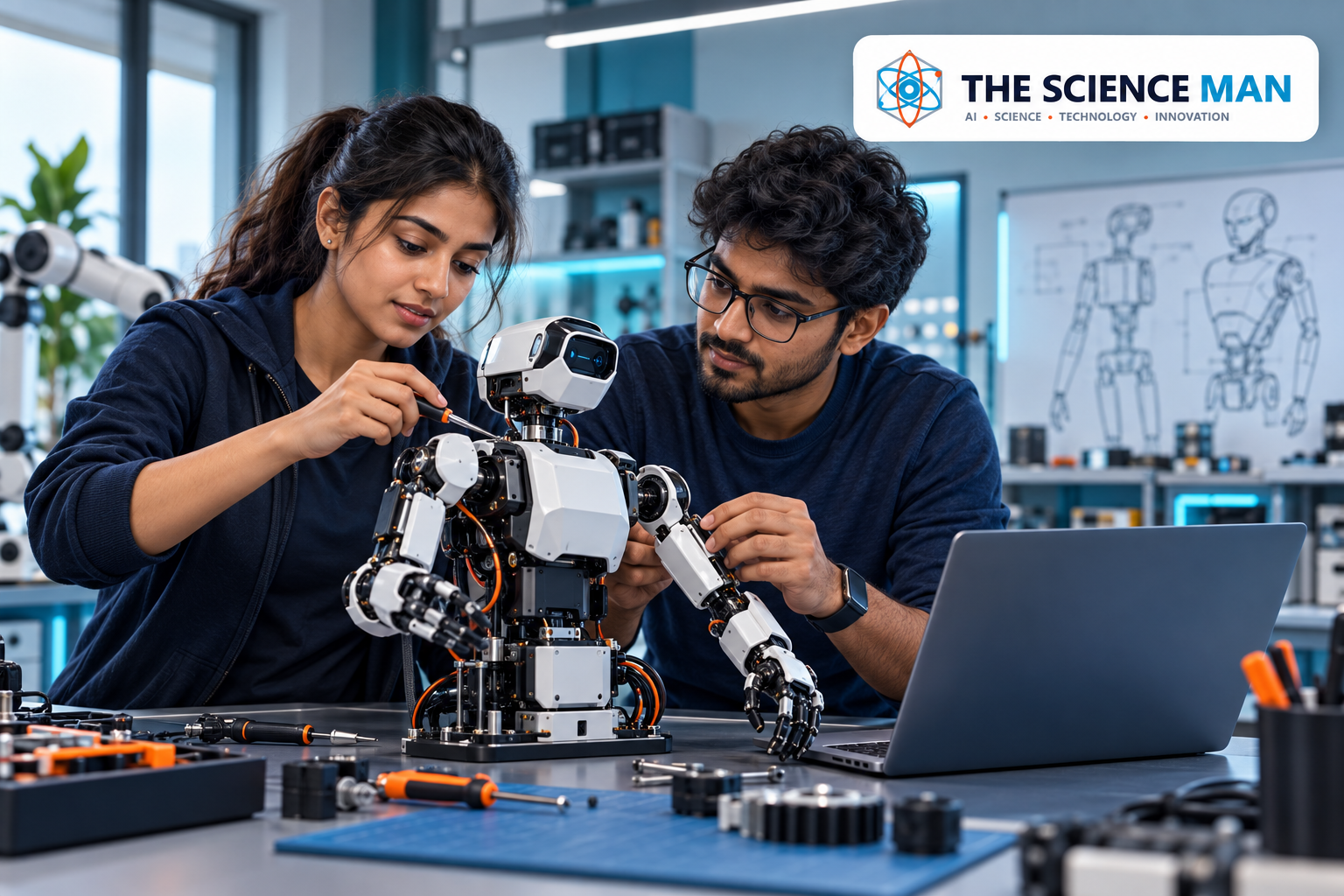
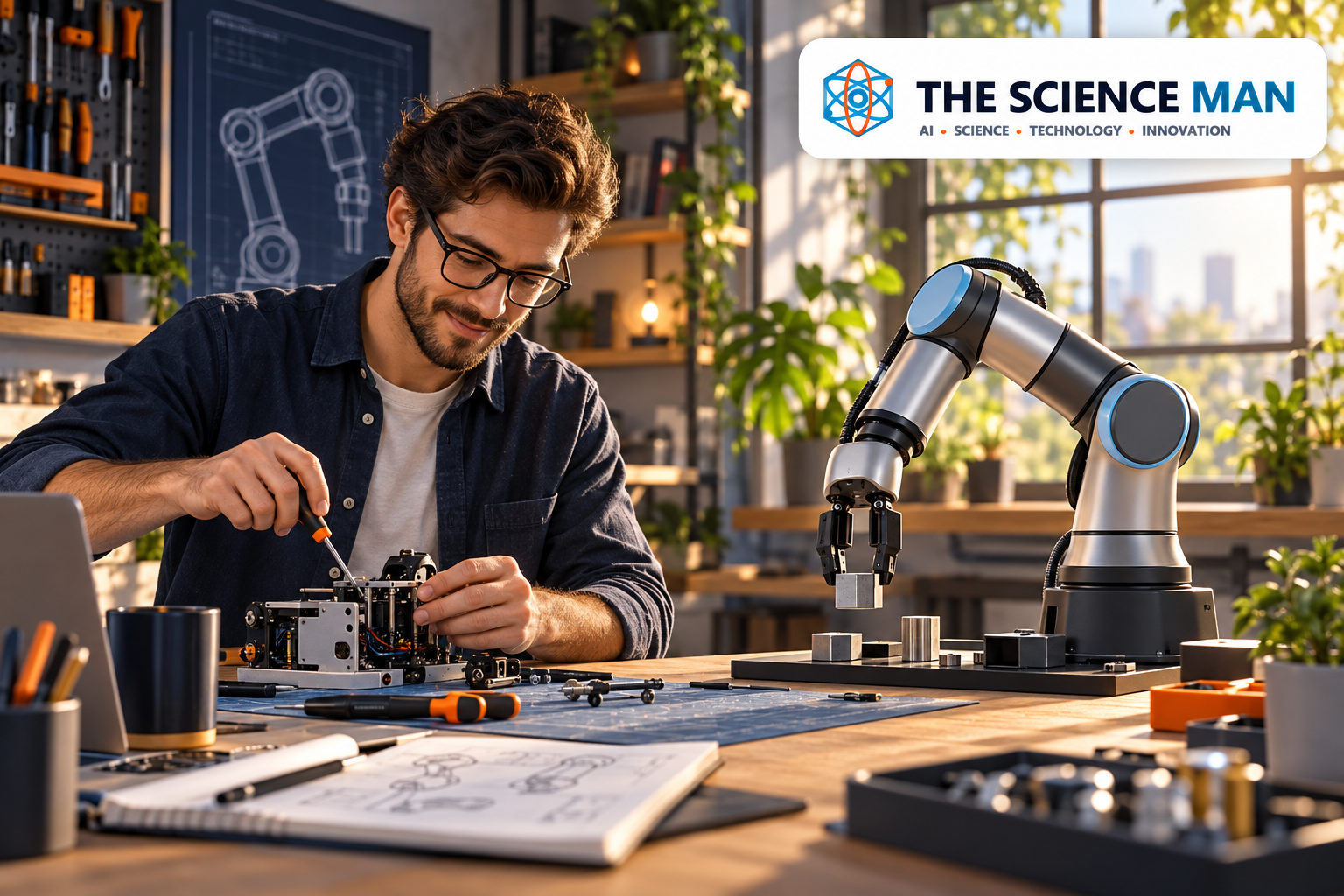
All images are AI-generated concept illustrations for The Science Man. They do not depict verified products or field tests.

digitalwebman@gmail.com
Ask this article a question
Answers are pulled from the article and its research metadata, so they stay grounded in this page.
