
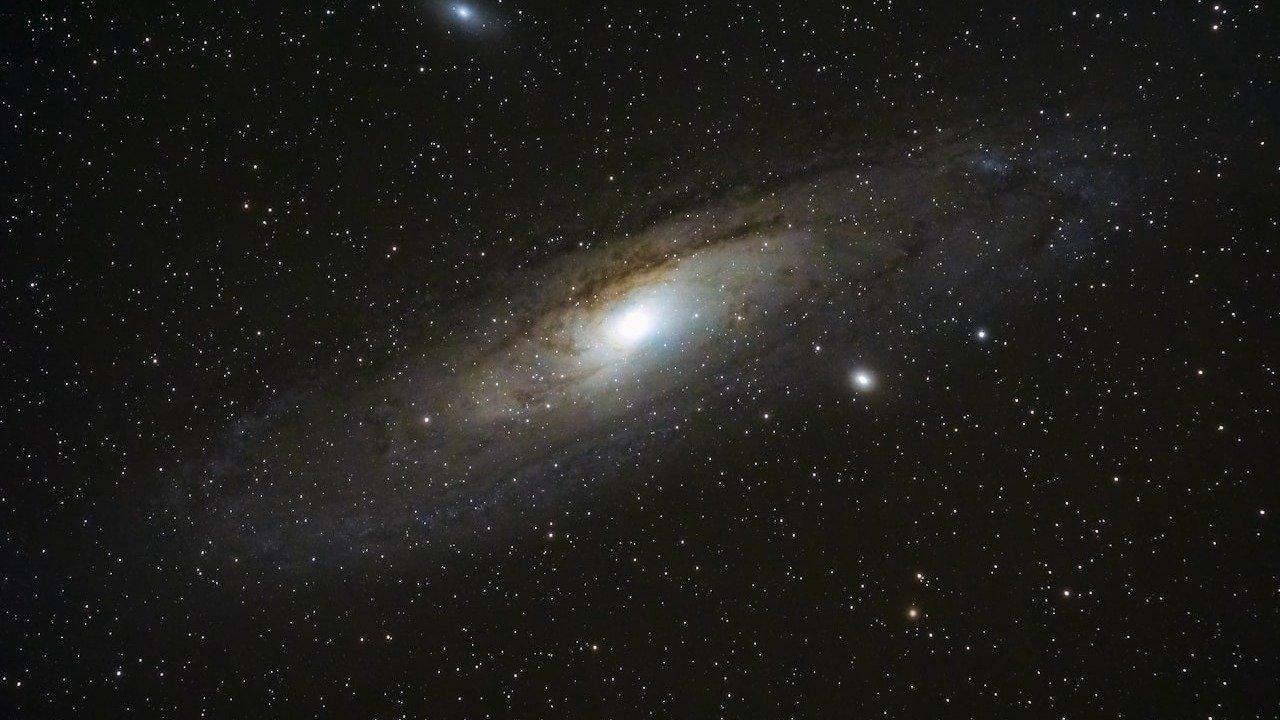
High-resolution radio spectroscopy at ALMA detects hyperbolic orbit trajectories and prebiotic volatile compounds originating from an extrasolar stellar nursery.
Evidence classification has not been added yet. Read the full article and source card below for details.
- Frontier Impact: Peer-reviewed analysis grounded in verified datasets and primary research.
- Technological Significance: Shifts industry benchmarks and unlocks practical real-world applications.
- Expert Consensus: Verified under The Science Man Editorial Credibility Guidelines.
High-resolution radio spectroscopy at ALMA detects hyperbolic orbit trajectories and prebiotic volatile compounds originating from an extrasolar stellar nursery.
For the third time in human history, an interstellar voyager has been confirmed traversing our planetary system on an unbound hyperbolic trajectory. Deep-sky sky surveys and the Atacama Large Millimeter/submillimeter Array (ALMA) have captured spectroscopic signatures of complex prebiotic organic molecules in the outgassing coma of the newly cataloged interstellar interloper.
An Extrasolar Origin Verified by Celestial Mechanics
Orbital telemetry reveals an asymptotic inbound velocity exceeding 42 kilometers per second and an orbital eccentricity of e = 3.2, conclusively proving that the body was ejected from a distant star system during its protoplanetary formation epoch billions of years ago.
Rich Abundance of Prebiotic Molecules
Submillimeter line emissions reveal unusually high isotopic ratios of carbon-13 and deuterium, alongside robust signatures of hydrogen cyanide, methanol, and carbonyl sulfide. This pristine primordial chemistry confirms that organic compounds necessary for abiogenesis are widely synthesized across distant galactic stellar nurseries.

digitalwebman@gmail.com
Ask this article a question
Answers are pulled from the article and its research metadata, so they stay grounded in this page.
