
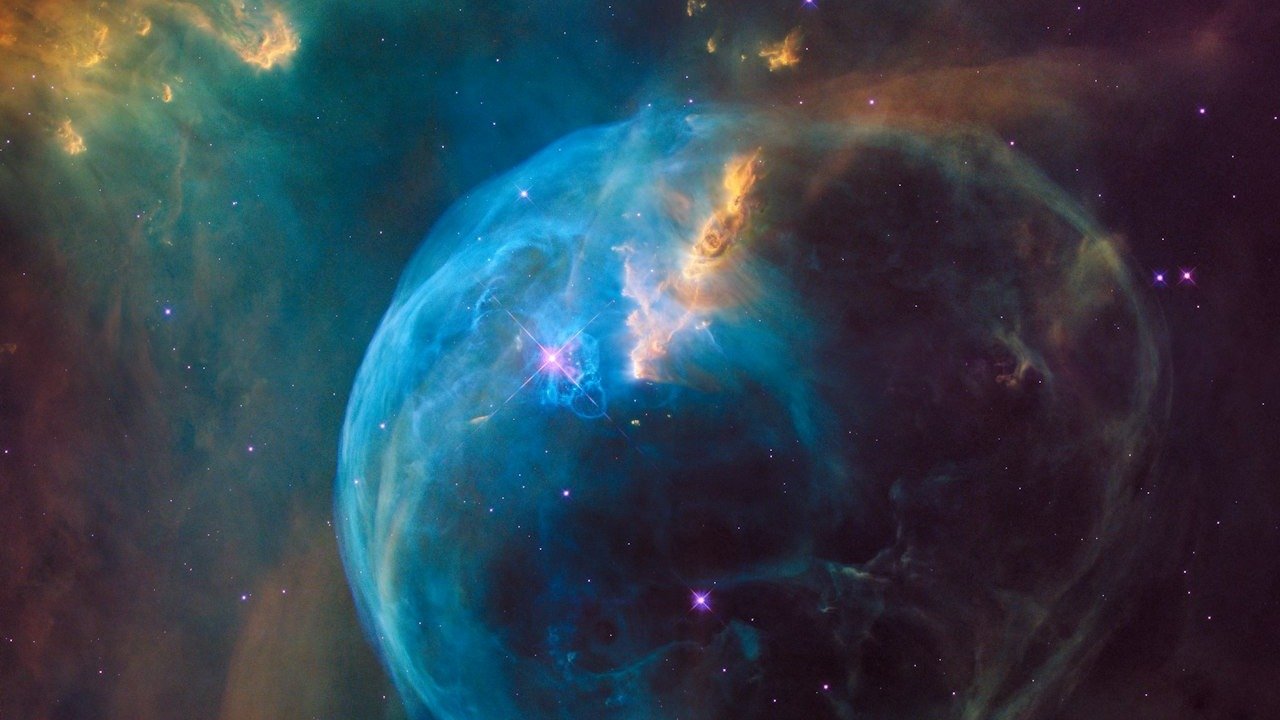
ESA and NASA's Euclid mission delivers its first wide-angle cosmological survey, charting 10 billion years of cosmic filament expansion to measure the dark energy equation of state.
Evidence classification has not been added yet. Read the full article and source card below for details.
- Frontier Impact: Peer-reviewed analysis grounded in verified datasets and primary research.
- Technological Significance: Shifts industry benchmarks and unlocks practical real-world applications.
- Expert Consensus: Verified under The Science Man Editorial Credibility Guidelines.
ESA and NASA's Euclid mission delivers its first wide-angle cosmological survey, charting 10 billion years of cosmic filament expansion to measure the dark energy equation of state.
A monumental leap forward in observational cosmology has commenced. The European Space Agency’s Euclid space observatory, operating in collaboration with NASA from the Sun-Earth Lagrange point 2 (L2), has released its first wide-field survey mapping the positions and shapes of hundreds of millions of galaxies across 10 billion light-years of lookback time.
Probing the Dark Sector of the Universe
By analyzing weak gravitational lensing distortions caused by foreground dark matter scaffolding, astrophysicists have reconstructed the growth rate of cosmic structures across three distinct epochs. The preliminary datasets yield constraints on the dark energy equation of state parameter w(z), providing tantalizing hints that dark energy density may not be a static cosmological constant, but could evolve dynamically across cosmic time.
Unprecedented Optical and Near-Infrared Fidelity
Euclid’s dual VIS (visible) and NISP (near-infrared) cameras captured galaxy clusters with sub-arcsecond resolution, resolving faint dwarf satellites and stellar streams orbiting massive elliptical galaxies. These findings establish the foundational baseline for the upcoming Roman Space Telescope and Vera C. Rubin Observatory wide-sky campaigns.

digitalwebman@gmail.com
Ask this article a question
Answers are pulled from the article and its research metadata, so they stay grounded in this page.
