
Meet the Nobel Prize winners of 2026 announced so far. Explore their discoveries, real laureate photos, official citations, and when Peace and Economic Sciences will be announced.
Evidence classification has not been added yet. Read the full article and source card below for details.
- Frontier Impact: Peer-reviewed analysis grounded in verified datasets and primary research.
- Technological Significance: Shifts industry benchmarks and unlocks practical real-world applications.
- Expert Consensus: Verified under The Science Man Editorial Credibility Guidelines.
Meet the Nobel Prize winners of 2026 announced so far. Explore their discoveries, real laureate photos, official citations, and when Peace and Economic Sciences will be announced.
Updated: 8 October 2026 (IST). The 2026 Nobel Prize announcements are in progress. As of this update, four categories have announced their laureates: Physiology or Medicine, Physics, Chemistry and Literature. The Peace Prize is scheduled for 9 October and the prize in Economic Sciences for 12 October. This page reports confirmed results and marks the two remaining categories as pending; names and images will be added only after their official announcements.
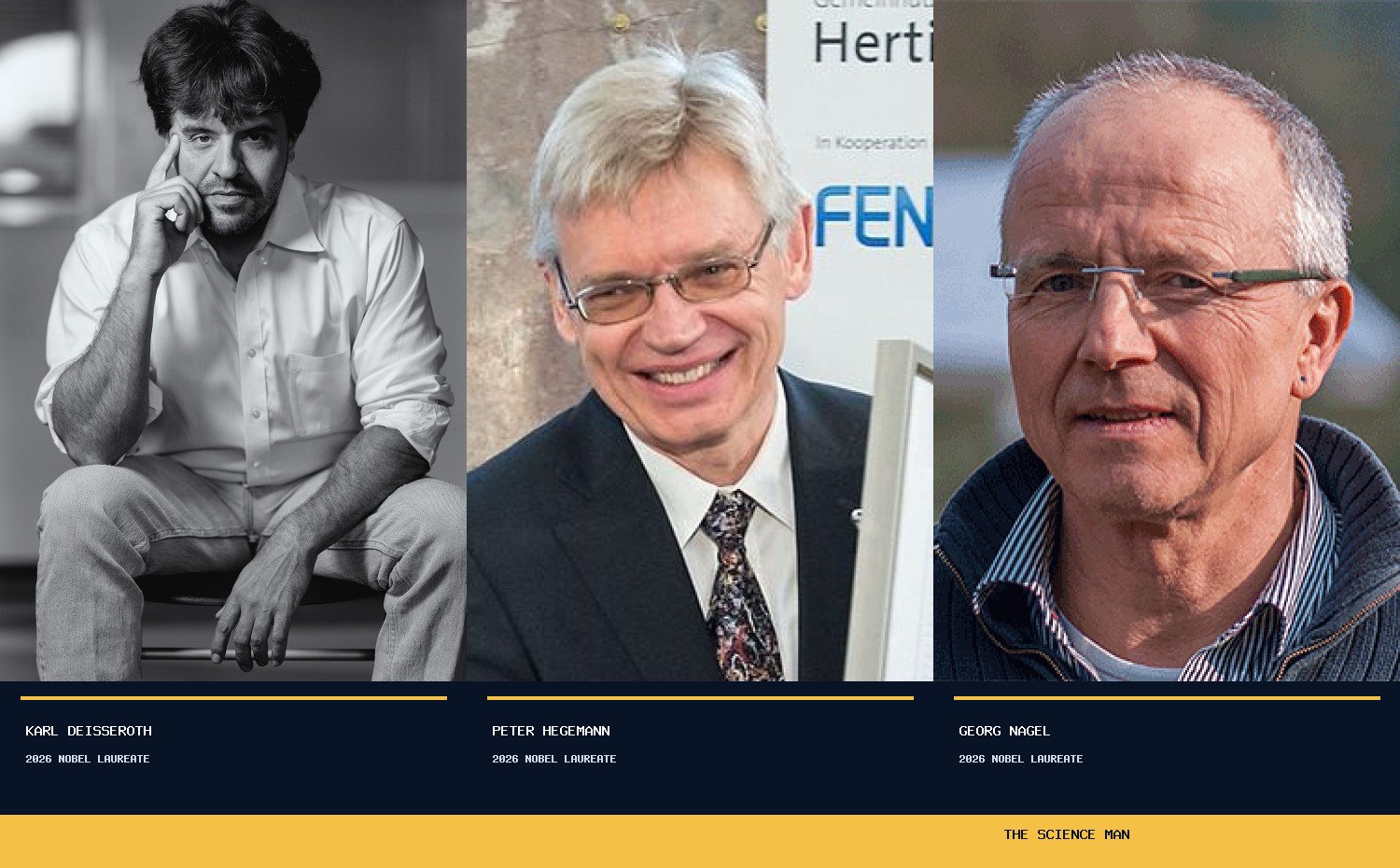
The 2026 Nobel Prize winners so far are neuroscientist Karl Deisseroth, biophysicists Peter Hegemann and Georg Nagel for discoveries that made optogenetics possible; physicist Francis Halzen for work behind the IceCube Neutrino Observatory and the discovery of high-energy astrophysical neutrinos; chemists Henri B. Kagan and Kenso Soai for discoveries in asymmetric synthesis; and Canadian writer Anne Carson for a body of literature that brings classical tradition into new forms.
THE SCIENCE MAN
This roundup is designed as a clear, current guide: a quick results table first, then plain-language explanations of each announced discovery, the work of the laureates, why it matters, and the limits of what the award does and does not say. It also includes a short decade table for the Medicine Nobel, photo credits, official reference links and answers to common questions. The individual category explainers already on The Science Man are linked where they add detail.
2026 Nobel Prize winners: full list announced so far
| Category | 2026 laureate(s) | Recognized for | Status |
|---|---|---|---|
| Physiology or Medicine | Karl Deisseroth, Peter Hegemann and Georg Nagel | Discoveries that enabled optogenetics, using light-sensitive ion channels to control neural activity | Announced 5 October |
| Physics | Francis Halzen | Decisive contributions to IceCube and the discovery of high-energy neutrinos from astrophysical sources | Announced 6 October |
| Chemistry | Henri B. Kagan and Kenso Soai | Non-linear effects and autocatalysis in asymmetric synthesis | Announced 7 October |
| Literature | Anne Carson | Her bold, inventive writing and its playful dialogue with classical tradition | Announced 8 October |
| Peace | Not announced yet | To be confirmed by the Norwegian Nobel Committee | Scheduled 9 October |
| Economic Sciences | Not announced yet | To be confirmed by the Royal Swedish Academy of Sciences | Scheduled 12 October |
“Not announced yet” is a live status as of the timestamp above, not a prediction. Nobel nominations are confidential; names discussed in public before an announcement are speculation unless the awarding institution confirms them.
Physiology or Medicine: light gives researchers a way to control neural activity
The 2026 Nobel Prize in Physiology or Medicine goes to Karl Deisseroth, Peter Hegemann and Georg Nagel for discoveries that led to optogenetics. Optogenetics combines genetics and optics: researchers use light-sensitive proteins to make selected cells respond to light, then use carefully timed light to switch neural activity on or off in a controlled experiment. The prize recognizes foundational discoveries behind the method, not a finished treatment or a universal way to control the human brain.
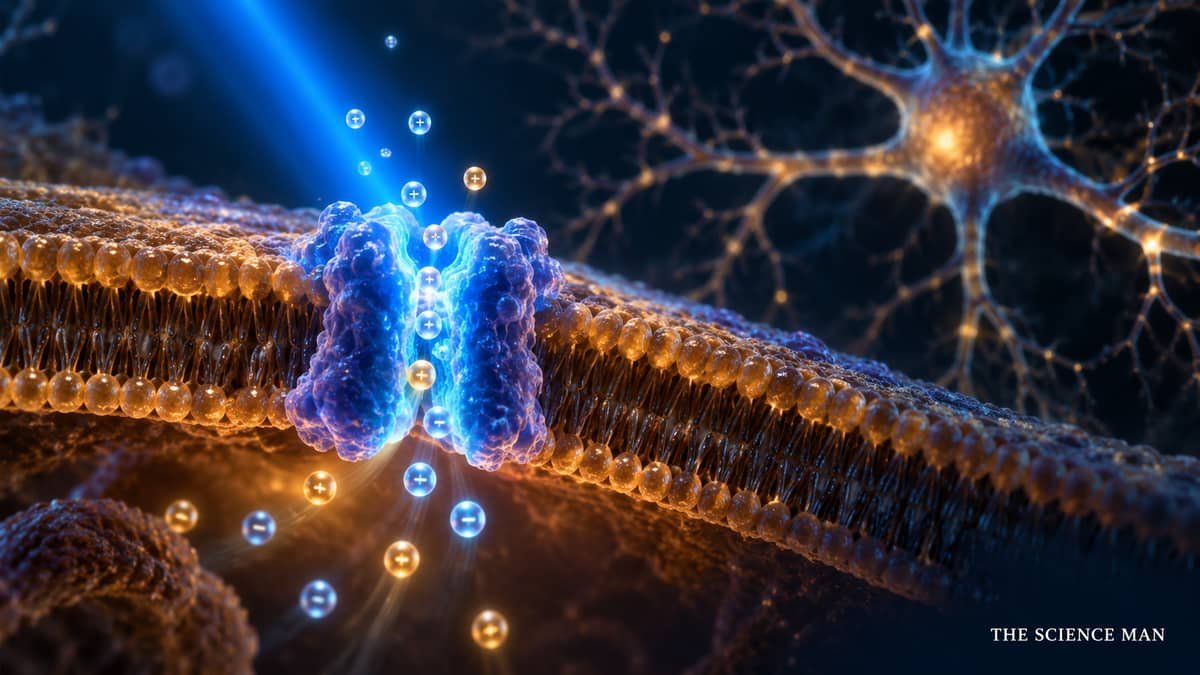
The key biological tool is a light-sensitive ion channel. Ion channels are protein pores in cell membranes. When open, they allow charged particles to pass through the membrane, changing the cell’s electrical state. Some microorganisms naturally use proteins called microbial opsins to respond to light. Hegemann and Nagel helped establish the properties of channelrhodopsins, light-gated channels found in algae. Deisseroth and collaborators helped turn the biology into a practical neuroscience method, showing how genes for these proteins could be targeted to chosen neurons and then activated with light.
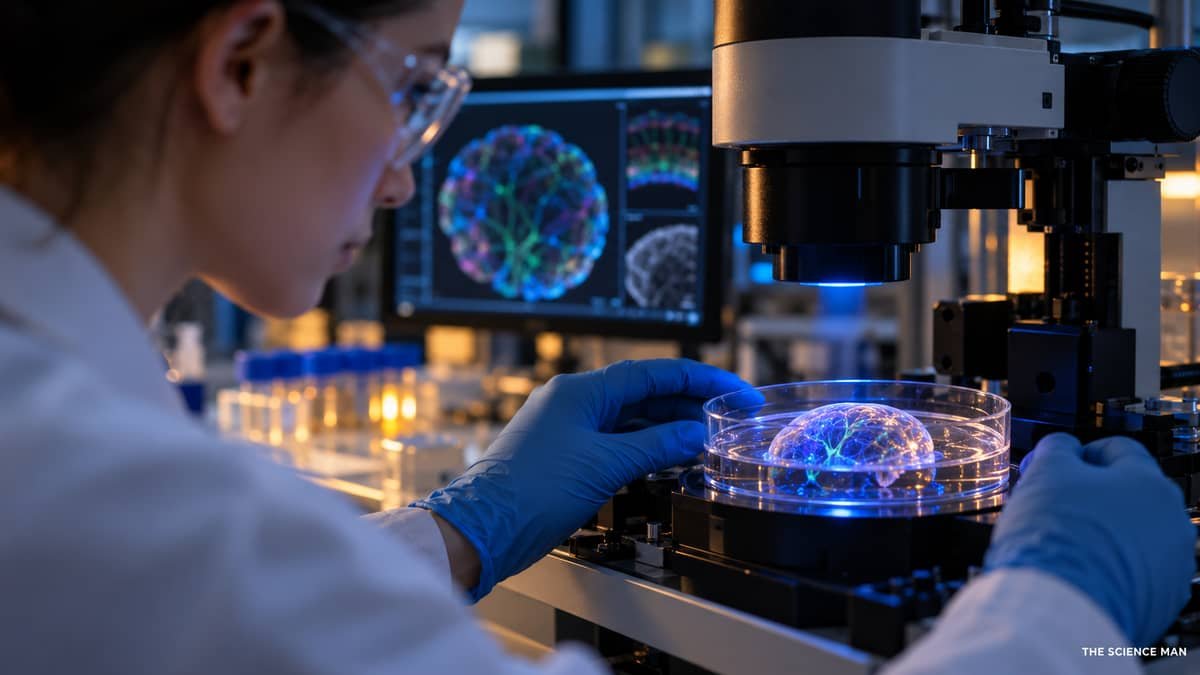
That sequence matters. The work moved from observing a surprising light response in a microorganism, to identifying the molecular switch, to adapting it for experiments in complex neural circuits. A scientist can select a cell type, introduce a light-sensitive protein and deliver pulses of light through an optical fibre or another suitable optical arrangement. The response can be fast enough to test whether a particular set of cells contributes to a behaviour or signal. Researchers can compare what happens when a circuit is active with what happens when it is quiet, while trying to keep other variables stable.
Before optogenetics, neuroscientists had tools such as electrical stimulation, drugs and genetic approaches. Each can answer valuable questions, but each also has trade-offs. An electrode may activate nearby cells that were not the intended target. A drug can act over a broad area and for a longer period than a researcher wants. Optogenetics can provide finer control over cell identity and timing in experimental models. It is not perfectly selective in every setting, and the quality of an experiment depends on targeting, light delivery, controls and the biological model.
THE SCIENCE MAN
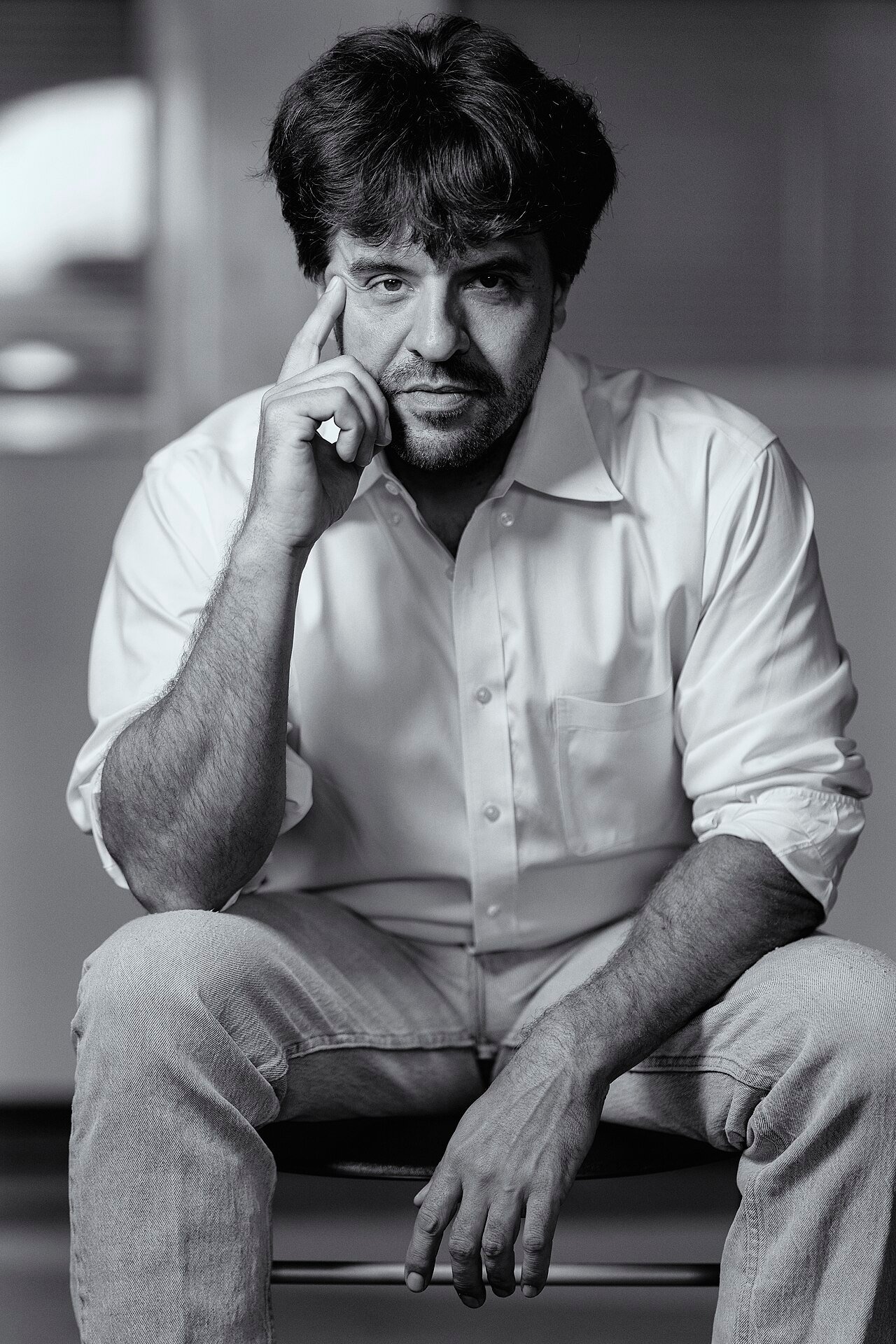
Karl Deisseroth: translating a molecular switch into a neuroscience method
Deisseroth is a psychiatrist, neuroscientist and bioengineer whose work bridged laboratory methods and questions about the brain. The value of that bridge is practical: a molecular discovery becomes much more powerful when researchers can put it into a defined cell population and reliably use it to test a hypothesis. Optogenetics has helped scientists study circuits involved in movement, perception, emotion, learning and disease models. These experiments can illuminate how a circuit participates in a process; they do not by themselves establish that one circuit is the only cause of a complex behaviour.
Good experiments with optogenetics need controls that separate the effect of the light from the effect of the protein, the optical equipment and the animal’s ordinary response. Researchers compare targeted cells with controls, verify where the protein is expressed and consider heating or other unintended effects. The method is strongest when it is paired with independent ways to measure neural activity. These safeguards are part of what makes the tool scientifically useful: precise interventions only produce strong evidence when the experiment rules out plausible alternatives.
THE SCIENCE MAN
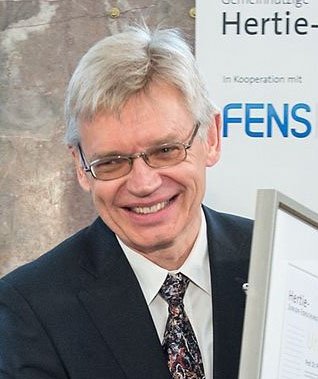
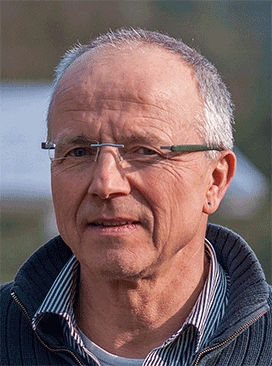
Peter Hegemann and Georg Nagel: discovering light-gated channels
Hegemann and Nagel investigated how certain single-celled algae sense light and move toward or away from it. This led to the identification and characterization of channelrhodopsins, proteins that can open an ion channel when illuminated. The discovery offered neuroscientists something especially valuable: a direct route from light to a change in a cell’s electrical activity. The channel is not a metaphorical switch. It is a membrane protein whose response can be measured and experimentally controlled.
The team’s contribution also shows why Nobel-recognized discoveries often have a long prehistory. Understanding the channel required biology, biophysics, molecular tools and careful testing of what light did to the cell. The eventual use in neuroscience depended on further engineering and delivery methods. In explaining the prize, it is therefore more accurate to describe a chain of discoveries and technical work than to imply that a single person invented every component of optogenetics in one moment.
THE SCIENCE MAN
What optogenetics can—and cannot—tell us
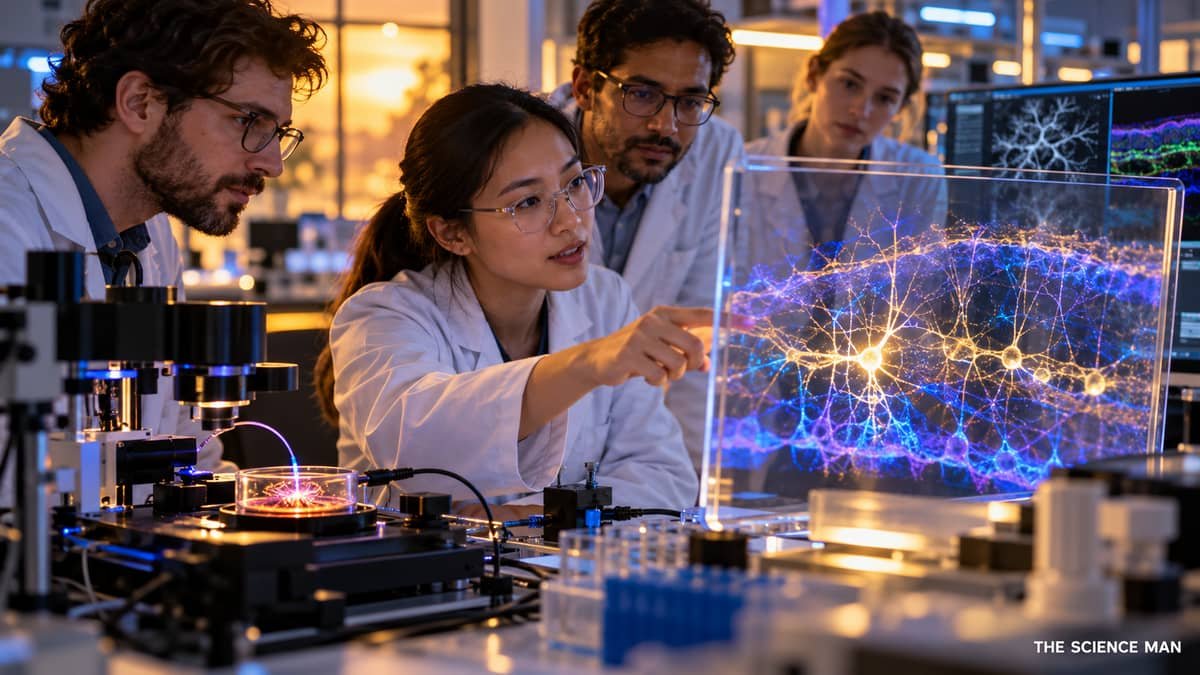
Optogenetics is a way to test causal questions in biology. If turning a selected set of neurons on changes a measured response, or turning it off disrupts a response, that result can support a role for those cells in the experimental system. It does not automatically explain a person’s thoughts, diagnose a psychiatric illness or establish a safe intervention in people. Light has to reach the target, the cells have to express the right protein, and researchers must account for how their model differs from a human brain.
THE SCIENCE MAN
 THE SCIENCE MAN
 THE SCIENCE MAN
That distinction is important when reading headlines that connect a Nobel discovery to future medicine. The awarded work supplies researchers with an experimental tool and a deeper understanding of neural biology. Any future clinical use would require additional evidence, engineering, safety testing and regulatory review. At present, the most direct impact is on research: scientists can ask more precise questions about circuits than many earlier tools allowed.
Physics: Francis Halzen and the IceCube view of the high-energy universe
Francis Halzen receives the 2026 Nobel Prize in Physics for decisive contributions to the IceCube Neutrino Observatory and the discovery of high-energy neutrinos of astrophysical origin. IceCube is a particle detector embedded in Antarctic ice near the South Pole. Rather than pointing a conventional telescope at the sky, it watches for faint flashes of light produced when neutrinos interact with matter in or near the detector.
Neutrinos are electrically neutral elementary particles. They interact through the weak nuclear force and can travel enormous distances through stars, gas, dust and even planets with a very small chance of being absorbed or deflected. That ability makes them messengers from places that can be difficult to observe in ordinary light. It is also what makes them so difficult to detect. A vast detector and a patient search are needed because most neutrinos pass through Earth without leaving a trace.
IceCube uses more than five thousand optical sensors deployed deep in the ice along vertical strings. When a neutrino does interact, it can produce charged particles that travel through the transparent ice faster than light travels in that medium. Those particles create Cherenkov light, a faint optical signal recorded by the sensors. Timing and brightness patterns allow researchers to estimate the event’s direction and energy. The inference is statistical and depends on calibration, background rejection and models of how particles move through the detector.
THE SCIENCE MAN
Halzen championed the idea that the ice itself could become a detector large enough to catch rare, energetic events. The engineering challenge was formidable: install sensitive equipment in a remote, cold environment, preserve it under thick Antarctic ice, and use the natural clarity of the ice as part of the instrument. IceCube’s measurements now let astronomers study a high-energy universe using particles that carry information differently from photons.
Why neutrinos matter in astronomy
Light-based astronomy has transformed our understanding of the cosmos, from radio waves to gamma rays. But light can be absorbed, scattered or blocked along the way, and some energetic objects are hard to interpret from electromagnetic signals alone. Neutrinos can emerge from violent environments and travel largely undisturbed. Finding a neutrino source gives astronomers another kind of evidence about the processes that accelerate particles to extreme energies.
The achievement is not simply “seeing a particle from space.” Researchers combine neutrino observations with data from telescopes and observatories that detect light, cosmic rays or gravitational waves. The combined picture can help narrow down possible sources and test models of cosmic accelerators. A single event may not identify an object with certainty; source attribution grows stronger when multiple observations align over time. IceCube has made this kind of multi-messenger astronomy more powerful.
There are clear limits. Neutrino detections are rare, the detector has a finite field of view and sensitivity, and some events have uncertain directions. IceCube does not provide a photograph of a distant source. It records signals in ice and reconstructs the particle’s likely path using physics and computation. This distinction helps explain both the observatory’s difficulty and its value: it adds a new measurement channel to astronomy rather than replacing telescopes.
For a deeper guide to Halzen, IceCube and the observatory’s construction, see our Physics Nobel explainer and the official 2026 Physics Nobel page.
Chemistry: Kagan and Soai reveal how molecular handedness can be amplified
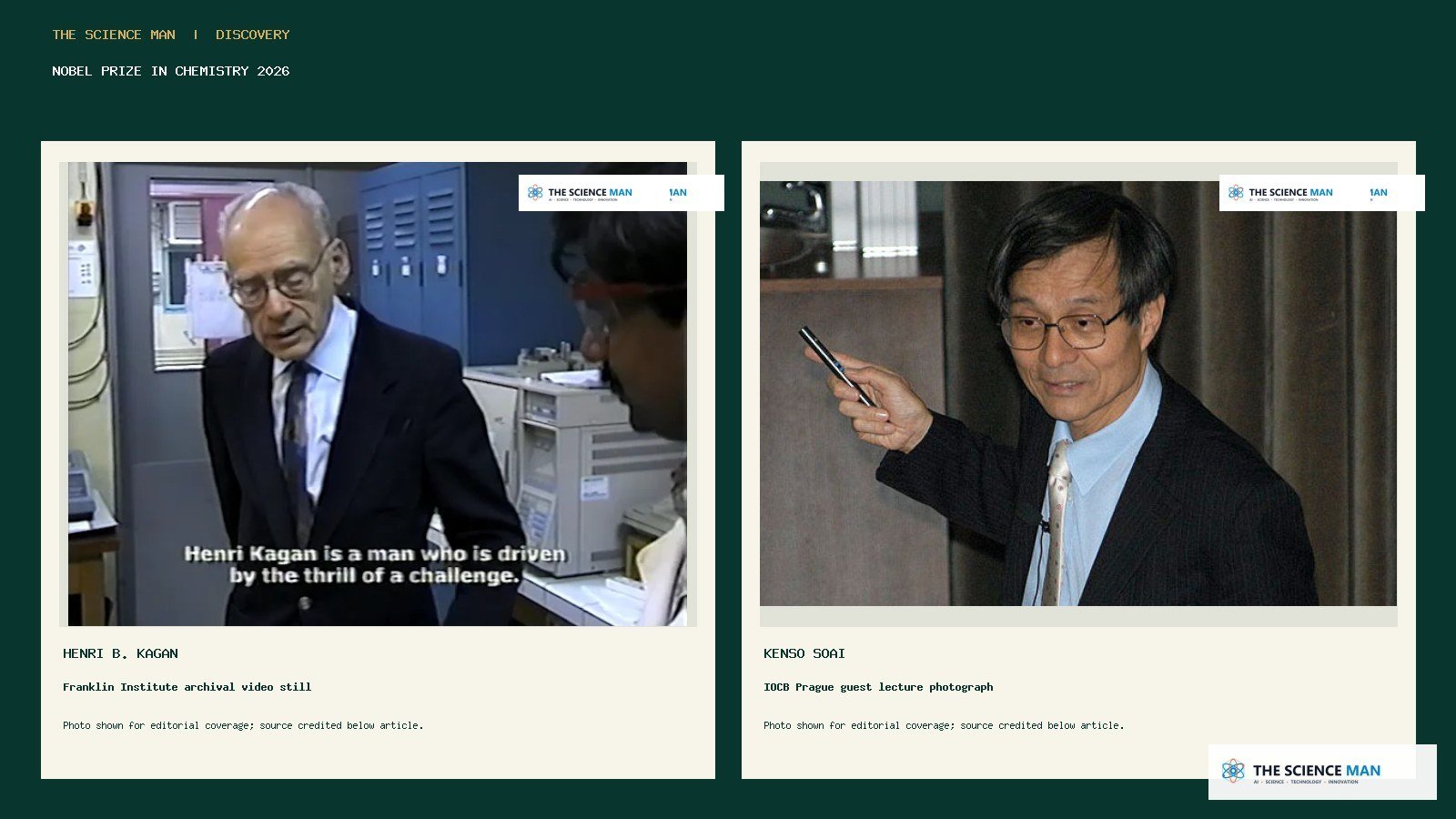
The 2026 Nobel Prize in Chemistry goes to Henri B. Kagan and Kenso Soai for discoveries about non-linear effects and autocatalysis in asymmetric synthesis. The chemistry centres on chirality: a molecule can have a left-handed and right-handed form, much like a left and right hand. The forms contain the same atoms connected in the same order, but their three-dimensional arrangements are mirror images that cannot simply be rotated to match.
Chirality matters because biological systems are themselves highly selective. Receptors, enzymes and other molecules can interact differently with two mirror-image forms. In a medicine, one version of a molecule may fit a biological target more effectively than the other; the other version may be less active or create unwanted effects. This is one reason modern chemistry tries to make a desired enantiomer—the particular handed form—rather than a random mixture of both.
Asymmetric synthesis is the set of methods used to favour one mirror-image product. Kagan’s work helped explain how chiral catalysts can influence a reaction and how the product mixture can sometimes show a non-linear relationship to the catalyst’s own handedness. In plain terms, the outcome may be more strongly biased than a simple one-to-one expectation predicts. Understanding that effect allows chemists to design and interpret catalytic reactions with greater precision.
THE SCIENCE MAN
Soai’s experiments showed a striking route to amplification: in a particular reaction, a chiral product can help catalyse the formation of more of itself. This is autocatalysis. A small initial imbalance between left- and right-handed molecules can therefore be amplified as the reaction proceeds. The Soai reaction became a model system for investigating how a tiny asymmetry can grow into a strong preference for one handed form.
Why the Kagan and Soai discoveries belong together
Kagan and Soai addressed connected but distinct pieces of a broad scientific puzzle. Kagan clarified non-linear behaviour in asymmetric catalysis; Soai demonstrated autocatalytic amplification in a reaction that became central to discussions of chirality. Together, these insights help chemists reason about how handedness is selected and amplified in synthetic systems. They also give researchers experimental systems for asking how chemical asymmetry might emerge.
The connection to medicine is important, but it should be described carefully. These discoveries inform the principles and tools behind selective chemical synthesis; they do not mean that a particular drug is automatically safer or more effective because it is made asymmetrically. Each candidate medicine still requires its own evidence on structure, dose, efficacy, metabolism and safety. The Nobel recognizes chemistry that made more controlled synthesis possible, not the approval of a specific treatment.
The topic also touches a large question in the origin-of-life sciences: why does life show a preference for certain molecular handednesses? The Soai reaction offers one laboratory model for amplification, but no single experiment settles how life’s molecular asymmetry arose on early Earth. A good scientific account separates what the reaction demonstrates from hypotheses about the historical emergence of living systems.
Read the complete category-specific background in The Science Man’s Chemistry Nobel explainer, and compare it with the official Nobel Chemistry summary.
Literature: Anne Carson’s dialogue with classical tradition
The 2026 Nobel Prize in Literature is awarded to Canadian poet, essayist, translator and classicist Anne Carson. The Swedish Academy recognized an inventive body of work that engages playfully with classical tradition while creating new forms for contemporary literature. Carson’s books move across poetry, prose, translation, scholarship, dialogue and visual arrangement. The result is writing that can feel at once ancient and immediate: Greek myth or classical texts may provide a structure, while contemporary language, personal feeling and unexpected form change how a reader experiences them.

THE SCIENCE MAN
Carson is known for books such as Autobiography of Red, The Beauty of the Husband, Men in the Off Hours and Nox. These works do not sit comfortably in a single bookstore category. Autobiography of Red reimagines the mythic figure Geryon through a modern verse narrative; other books combine translation, essay, fragment, image and reflection. Her writing often makes the reader notice the act of reading: how a classical source is carried into the present, what translation preserves, and what a new form makes newly visible.
Her work as a classicist is not simply background information. It shapes the way she handles the distance between a surviving ancient text and a modern reader. Rather than treating antiquity as a sealed museum, Carson allows old voices and contemporary speech to meet, sometimes uneasily. A myth can become a way to think about desire, memory, grief or identity without losing its historical texture. The exchange between eras is part of the work’s energy.
Why literary form matters in this award
Literature is not assessed like a scientific result. A novel, poem or essay does not need to produce a repeatable measurement to have lasting value. The Literature Nobel recognises a sustained body of writing, its artistic power and its contribution to world literature. Carson’s genre-crossing practice is a useful reminder that form is not packaging added after an idea. The arrangement of lines, fragments, citations, images and voices can be part of what the work is saying.
That does not mean every reader must enjoy the same style. Experimental writing can ask more of its audience than a conventional narrative. Readers may encounter allusions they do not immediately recognize or shifts between scholarship and lyric voice. A practical way into Carson is to read a short passage slowly, notice how the speaker’s voice changes, then look up the classical source only if it deepens the experience. Background knowledge can enrich the reading, but the work can still be approached through its sound, images and emotional movement.
Carson’s prize also makes the 2026 list unusually cross-disciplinary. The other announced awards recognize tools and discoveries in biology, physics and chemistry; Literature asks what can be made from language, inherited stories and form. The subjects differ, but each award points to a form of attention: controlling an experiment, detecting a faint signal, tuning a chemical reaction or hearing a new possibility in an old text.
See the official Literature Nobel page for the Swedish Academy’s announcement and background on Carson.
Peace and Economic Sciences: what is still pending
At the time this article was updated, neither the 2026 Nobel Peace Prize nor the prize in Economic Sciences had been announced. The official schedule lists the Peace Prize for Friday, 9 October, and Economic Sciences for Monday, 12 October. After each announcement, this section and the table above should be updated with the confirmed laureate, the awarding body’s citation and a properly credited image where an appropriate image is available.
The Peace Prize is decided by the Norwegian Nobel Committee in Oslo. It may go to an individual or an organisation whose work is recognised under the terms in Alfred Nobel’s will. Public speculation before the decision is common, but the Nobel institutions keep nominations confidential for 50 years. A list of people or groups publicly promoted by a politician, campaign or commentator is not a verified shortlist and should not be presented as one.
The Economic Sciences prize has the full formal name Sveriges Riksbank Prize in Economic Sciences in Memory of Alfred Nobel. It is administered by the Royal Swedish Academy of Sciences and is commonly grouped with the Nobel Prizes in public coverage, while its institutional origin is distinct from the five categories in Nobel’s original will. Its laureates are selected for research that has substantially advanced economic science. The announcement is scheduled on 12 October; until then, a name or photograph would be guesswork.
Readers who return after the remaining announcements should check the “updated” line at the top. The article title and URL can remain stable while the results table is revised, which makes the page easier to bookmark and cite. Any update should add the new winner, official rationale, relevant context and photo credit together, rather than adding a name without explanation.
Ten-year perspective: Medicine Nobel discoveries from 2017 to 2026
The 2026 prize fits into a decade of Medicine awards that have often recognised tools and foundational mechanisms. The following table gives a compact 2017–2026 timeline. It is a Medicine-only historical view, not a claim that the other Nobel categories followed the same pattern. The broad range—from biological clocks and oxygen sensing to RNA, immune regulation and optogenetics—shows how Nobel-recognized research can take years to move from basic mechanisms into wider use.
| Year | Medicine laureate(s) | Recognized discovery |
|---|---|---|
| 2026 | Karl Deisseroth, Peter Hegemann, Georg Nagel | Optogenetics and light-gated ion channels |
| 2025 | Mary E. Brunkow, Fred Ramsdell, Shimon Sakaguchi | Peripheral immune tolerance |
| 2024 | Victor Ambros, Gary Ruvkun | MicroRNA and post-transcriptional gene regulation |
| 2023 | Katalin Karikó, Drew Weissman | Nucleoside base modifications that enabled effective mRNA vaccines |
| 2022 | Svante Pääbo | Genomes of extinct hominins and human evolution |
| 2021 | David Julius, Ardem Patapoutian | Receptors for temperature and touch |
| 2020 | Harvey J. Alter, Michael Houghton, Charles M. Rice | Discovery of hepatitis C virus |
| 2019 | William G. Kaelin Jr., Peter J. Ratcliffe, Gregg L. Semenza | How cells sense and adapt to oxygen availability |
| 2018 | James P. Allison, Tasuku Honjo | Cancer therapy by inhibition of negative immune regulation |
| 2017 | Jeffrey C. Hall, Michael Rosbash, Michael W. Young | Molecular mechanisms controlling circadian rhythms |
This timeline is not a ranking of discoveries. Nobel years are selected by committees on the basis of specific work, and an award may come long after the key experiments were published. The time between discovery and recognition can reflect the evidence needed to establish significance, the development of a field and the committee’s evaluation process. It also means that one year’s laureates should not be treated as a forecast of what will win next.
For the longer Medicine archive, including a visual timeline, see our dedicated 2026 Physiology or Medicine article. It explains the optogenetics award separately and includes the credited portraits of all three Medicine laureates.
How the Nobel Prize system works
Alfred Nobel’s will named Physics, Chemistry, Physiology or Medicine, Literature and Peace. The Swedish institutions administer the scientific and Literature awards, while the Peace Prize is decided in Norway. The Economic Sciences prize was established by Sweden’s central bank in memory of Nobel and first awarded in 1969. That history explains why it is often counted as the sixth Nobel category in everyday usage and why careful references use its formal name.
Each field has its own awarding body and process. Qualified nominators submit nominations; the relevant committee reviews the candidates, consults experts and prepares recommendations for the institution that makes the final decision. The nomination list is not public in real time. Nobel institutions do not publish the active-year nominees, and public betting lists or press speculation do not represent the committee’s confidential deliberations.
The Nobel Prize recognises an achievement, contribution or body of work as the awarding institution describes it. It does not mean that the laureate worked alone, that every question in the field is now settled or that the research has already become a product or treatment. Modern discoveries depend on colleagues, laboratories, students, institutions, instruments and prior work. A Nobel citation names the people recognised for the award; it cannot list every person who helped build the field.
The award is presented with a medal, diploma and monetary component. When multiple people share one category’s prize, the amount is divided according to the awarding institution’s decision. The exact annual monetary sum can change, so readers should verify the official Nobel Foundation information rather than relying on a past year’s figure copied into an evergreen page.
What connects the 2026 Nobel Prize winners?
The four announced prizes point to different kinds of discovery. Medicine recognised an experimental method that makes neural activity easier to test. Physics recognised a detector and a particle signal that make high-energy cosmic processes more visible. Chemistry recognised ways to control and amplify a preference between mirror-image molecules. Literature recognised new forms created through dialogue with classical writing. These are not versions of the same achievement; they are examples of how a field’s tools can change what questions are possible.
There is a common thread in the relationship between precision and reach. In optogenetics, a light pulse can probe a selected cell population. In IceCube, a faint pattern of sensor flashes can help infer a neutrino’s direction. In asymmetric synthesis, researchers control the spatial arrangement of a reaction product. In Carson’s writing, formal choices guide how readers move between ancient material and present-day experience. Each field has its own standards of proof and interpretation, but a careful method helps make subtle patterns legible.
The practical impact also unfolds on different timelines. A laboratory tool may spread quickly among researchers while its clinical implications remain distant. A detector may generate years of data that refine the picture of cosmic sources. A catalytic principle can influence how chemists design later reactions without producing a single immediate medicine. A literary award can bring new readers to a writer’s existing books and translations. “Nobel-winning” is a description of recognition, not a measure of how soon society will feel a discovery’s effects.
For students and curious readers, the best way to use the 2026 list is to follow the source material. Read the official citation, then ask what observation or method changed. For a science prize, look for the experiment or instrument and what it can measure. For Literature, consider the writer’s form and sources. For Peace and Economic Sciences, wait for the institution’s announcement and read its rationale before drawing conclusions.
Frequently asked questions about the 2026 Nobel Prizes
Who won the Nobel Prize in 2026?
As of 8 October 2026, the announced winners are Karl Deisseroth, Peter Hegemann and Georg Nagel in Physiology or Medicine; Francis Halzen in Physics; Henri B. Kagan and Kenso Soai in Chemistry; and Anne Carson in Literature. Peace and Economic Sciences are still pending at the time of this update.
Who won the 2026 Nobel Prize in Medicine?
Karl Deisseroth, Peter Hegemann and Georg Nagel received the 2026 Nobel Prize in Physiology or Medicine for discoveries that led to optogenetics and the use of light-sensitive ion channels to control neural activity.
Who won the 2026 Nobel Prize in Physics?
Francis Halzen was awarded the Physics Nobel for decisive contributions to the IceCube Neutrino Observatory and the discovery of high-energy neutrinos of astrophysical origin.
Who won the 2026 Nobel Prize in Chemistry?
Henri B. Kagan and Kenso Soai were recognised for discoveries on non-linear effects and autocatalysis in asymmetric synthesis, research that advances understanding of how chemistry can favour one molecular handedness.
Who won the 2026 Nobel Prize in Literature?
Canadian author Anne Carson received the 2026 Literature Nobel for inventive writing that engages with classical tradition and creates new forms for contemporary literature.
When will the 2026 Peace and Economics winners be announced?
The official schedule lists the Peace Prize announcement for 9 October 2026 and the Economic Sciences announcement for 12 October 2026. This page is dated 8 October and therefore marks both as pending.
Are there six or five Nobel Prize categories?
Alfred Nobel’s will specified five prizes: Physics, Chemistry, Physiology or Medicine, Literature and Peace. Economic Sciences is a later prize established in memory of Nobel and is commonly grouped with the other awards. Its formal name preserves that distinction.
Do Nobel Prize winners receive the whole prize amount individually?
Not always. If a prize is shared, the monetary component is divided according to the awarding institution’s decision. The amount can change from year to year, so check the current Nobel Foundation announcement for the 2026 figure.
Photo credits and editorial notes
- Medicine feature collage: real portraits of Karl Deisseroth, Peter Hegemann and Georg Nagel. Individual credits follow.
- Karl Deisseroth: Christopher Michel, CC BY-SA 4.0, via Wikimedia Commons.
- Peter Hegemann: Millencolin, CC BY-SA 4.0, via Wikimedia Commons.
- Georg Nagel: Millencolin, CC0, via Wikimedia Commons.
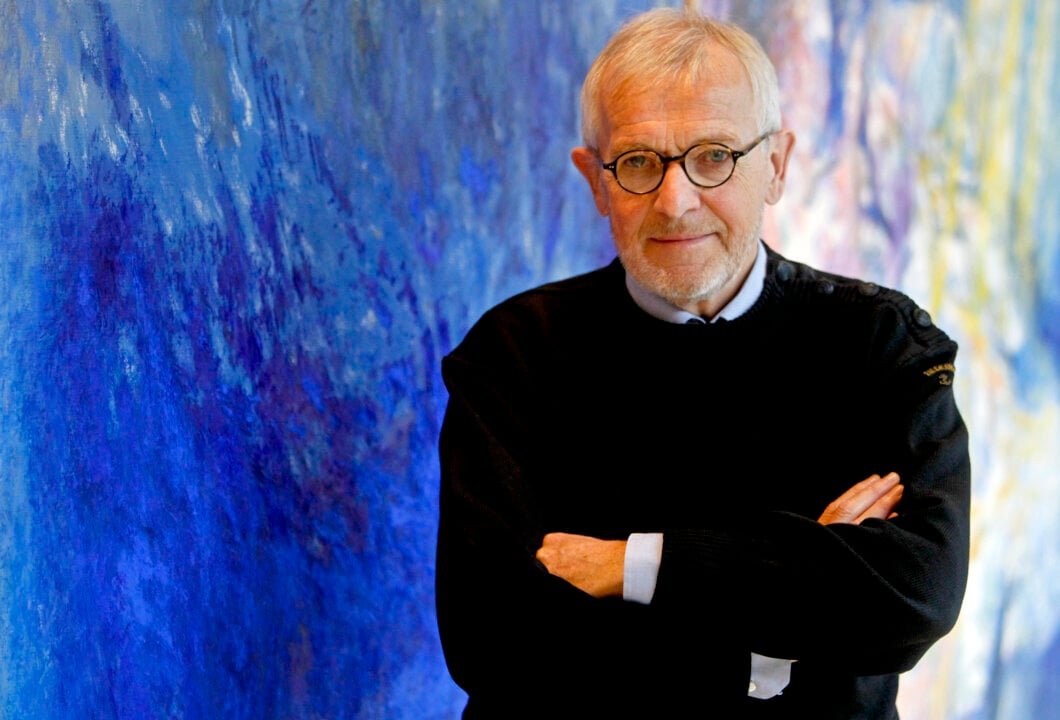
- Francis Halzen: Bernardo Pérez / El País, via NobelPrize.org.
- Henri B. Kagan and Kenso Soai: Kagan portrait courtesy of The Franklin Institute; Soai lecture photograph courtesy of IOCB Prague.
- Anne Carson: Jay Dixit, CC BY-SA 4.0, via Wikimedia Commons. License: Creative Commons Attribution-ShareAlike 4.0. Source file: Wikimedia Commons.
- Three optogenetics visuals: conceptual editorial illustrations created for The Science Man. They are not photographs, microscopy images, medical images or depictions of a specific study.
Official sources
- 2026 Nobel Prize in Physiology or Medicine
- 2026 Nobel Prize in Physics
- 2026 Nobel Prize in Chemistry
- 2026 Nobel Prize in Literature
- Official 2026 Nobel Prize announcement schedule
- 2025 Medicine Nobel: peripheral immune tolerance
- Official archive of Nobel Prizes
Editorial note: This page is a dated roundup of confirmed announcements. It is updated when Nobel-awarding institutions publish new results. The Science Man’s corner brand is a separate site mark; it does not imply that the Nobel Foundation endorses this article.

digitalwebman@gmail.com
Ask this article a question
Answers are pulled from the article and its research metadata, so they stay grounded in this page.

.jpg)